
When people search for a therapist, they are usually looking for safety, comfort, and someone they can trust. Your website becomes their first meeting with you, and even the smallest details can shape how they feel. A calm, clear, and welcoming design can ease their worries and help them feel more open to reaching out.
Simple elements like soft colors, easy navigation, friendly photos, and clear wording quietly build trust. Visitors may not notice these details directly, but they feel the difference. A well-designed therapist website shows care, professionalism, and understanding—qualities that clients look for before booking an appointment.
In this blog, we’ll talk about the quiet design details that make clients trust you. From layout to visuals to tone, you’ll learn how to create a therapist website that feels safe, warm, and supportive. These simple design tips can help clients feel connected and confident even before they meet you.
Introduction to Therapist Website Design
Your website is more than a digital business card. It’s the first safe space you create for potential clients. When someone visits your site, they’re often feeling vulnerable, uncertain, or overwhelmed. They’re looking for signs that you understand what they’re going through and that you’re the right person to help them.
Good therapy website design doesn’t shout for attention. Instead, it whispers reassurance. It guides visitors gently, answers their unspoken questions, and removes barriers between their need for help and their decision to reach out. Every element, from font choice to button placement, plays a role in building that crucial sense of safety and trust.
The best therapist websites balance professionalism with warmth, information with simplicity, and credibility with approachability. They make clients feel seen, understood, and welcome before the first session even begins.
The Quiet Details That Make Clients Trust You
A therapist website should feel calm, safe, and trustworthy. The quiet details—soothing colors, clear messaging, clean layouts, and genuine photos—help clients feel understood and supported. When your design is warm and reassuring, visitors instantly trust you and feel confident reaching out for help.
1. Trust

Trust is the foundation of the therapeutic relationship. A carefully crafted medical website design ensures clients feel safe and confident before booking a session. Unlike other service providers, therapists ask clients to share their deepest fears, traumas, and struggles. That requires an extraordinary level of trust that must be earned carefully.
Your therapist web design serves as the first trust-building conversation. Visitors are subconsciously asking themselves: Does this person seem safe? Do they understand my struggles? Will they judge me? Can I be vulnerable here? Your website answers these questions through design choices before a single word is spoken.
When trust is present in your design, clients feel:
- Safe enough to explore your services without pressure
- Understood through thoughtful, empathetic messaging
- Confident in your professionalism and expertise
- Comfortable enough to take the next step and contact you
Without trust, even the most qualified therapist will struggle to convert website visitors into clients. People simply won’t reach out if something feels off, even if they can’t articulate exactly what that something is.
2. Calming Layouts That Help Clients Feel Safe
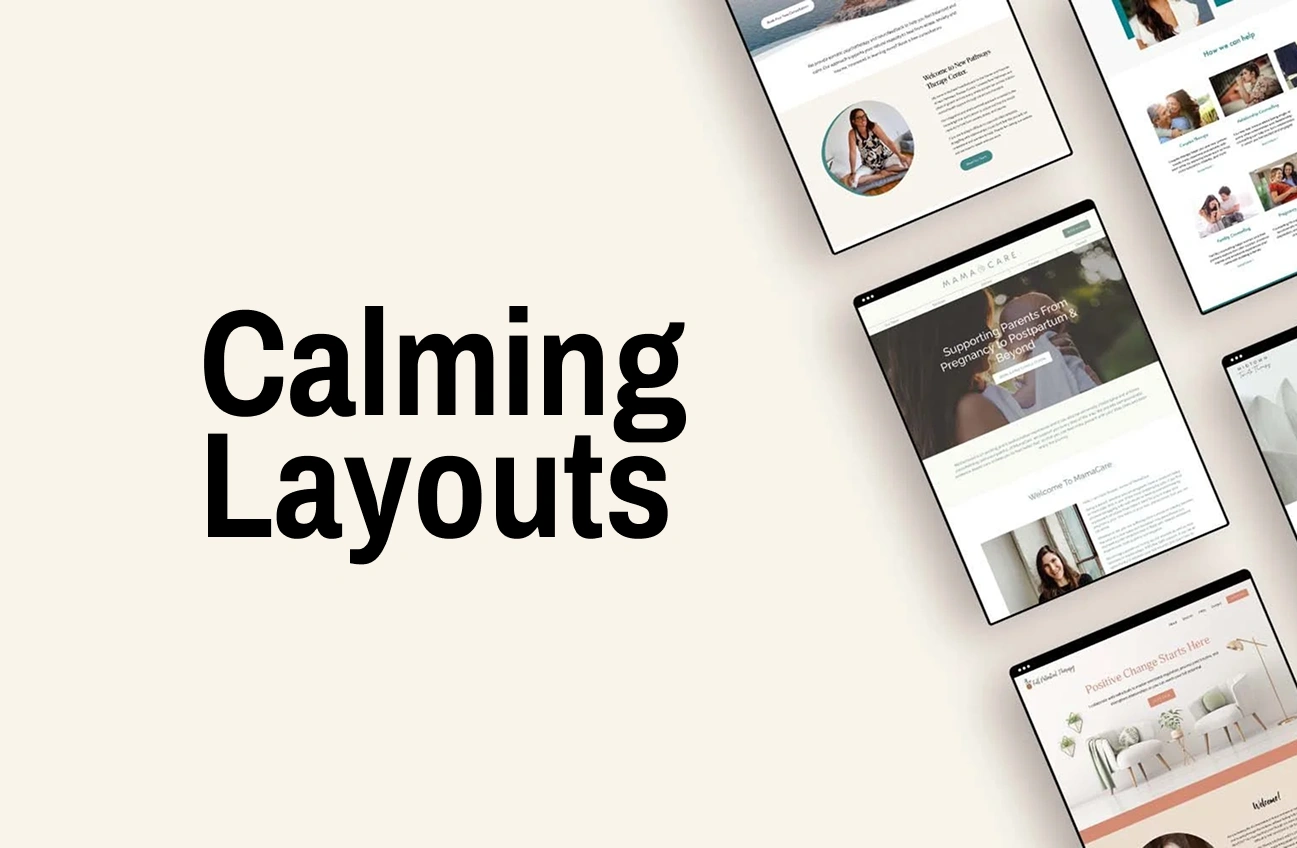
The website layouts create the first impression before visitors read a single word and are designed to improve user experience, making visitors feel calm and guided. A cluttered, chaotic layout can trigger anxiety, while a calm, organized structure promotes feelings of safety and control.
Best therapist website design practices emphasize breathing room. White space isn’t wasted space—it gives the eyes and mind a place to rest. When information is properly spaced and organized, visitors can process what they’re seeing without feeling overwhelmed.
Consider these layout principles for a calming effect:
- Use generous margins and padding between sections to create visual breathing room
- Limit the amount of text in any single section to prevent information overload
- Break content into digestible chunks with clear headings
- Maintain consistent alignment throughout the site for a sense of order
- Avoid auto-playing videos or animations that can startle visitors
- Keep your homepage focused on one clear message rather than trying to say everything at once
Think of your layout as the physical space of your therapy office. Just as you’d arrange comfortable seating and calming decor, your website layout should feel like a safe, welcoming environment where clients can settle in and explore at their own pace.
3. Soothing Color Palettes That Build Emotional Comfort
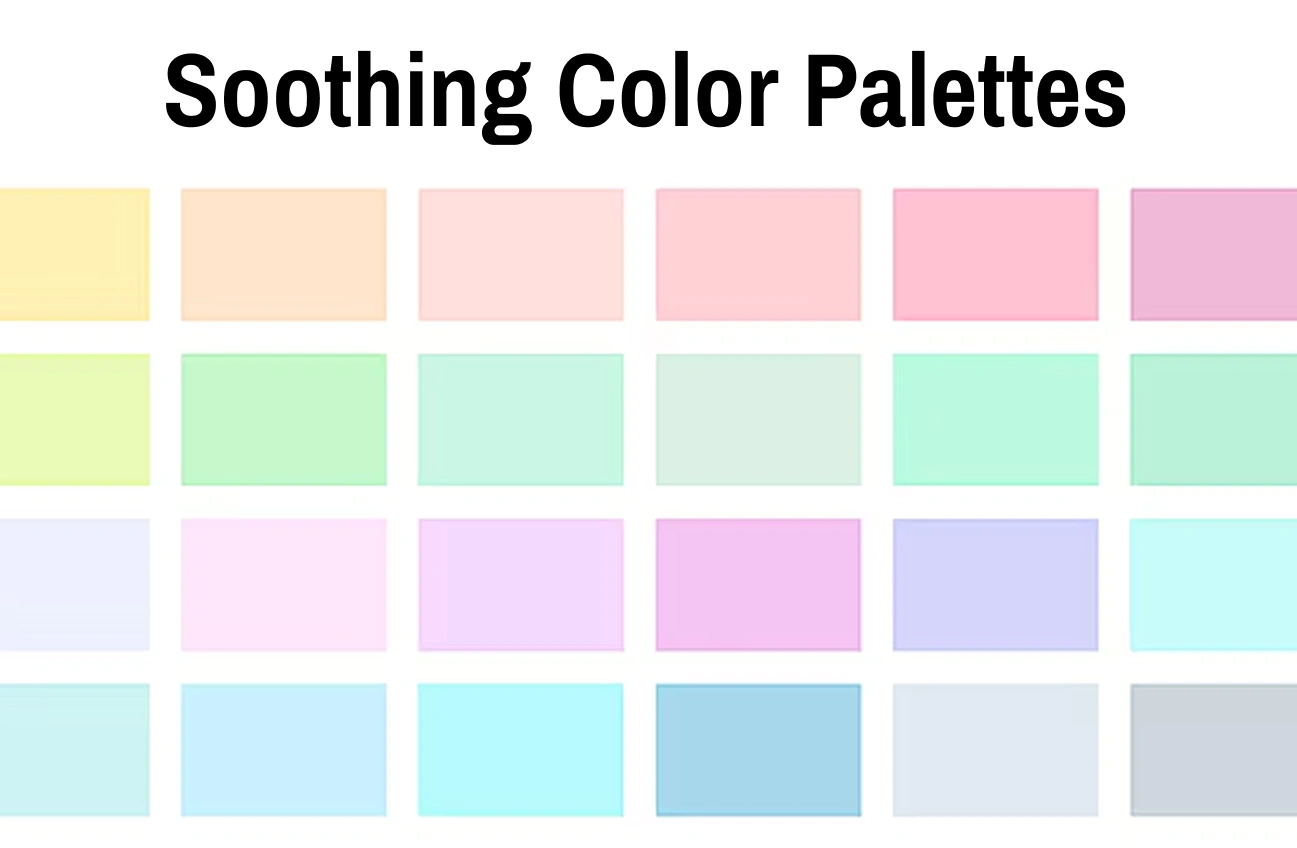
Color palettes speak directly to our emotions, often bypassing conscious thought. The colors you choose for your therapist branding and design can either soothe anxious visitors or inadvertently increase their stress.
Soft, muted tones typically work best for therapy websites. Pairing colors with thoughtful typography enhances calmness and trust for visitors. Blues and greens evoke calmness and trust. Warm earth tones like soft beige, sage, or muted terracotta create feelings of comfort and grounding. Gentle lavenders and dusty roses can feel nurturing and compassionate.
Colors to approach thoughtfully:
- Avoid harsh reds or bright oranges, which can feel aggressive or alarming
- Skip neon or overly saturated colors that create visual stress
- Limit black and dark grays, which can feel heavy or depressing in large amounts
- Use white or cream as your primary background to create that essential breathing room
- Choose 2-3 main colors and stick with them consistently throughout your site
Your color palette should reflect your therapeutic approach and specialty. A trauma-focused therapist might choose deeply calming blues and soft grays. A therapist working with children might incorporate gentle pastels. Someone specializing in creative therapy might use warm, earthy tones that feel grounding yet inspiring.
The key is consistency. When your colors work together harmoniously throughout your site, they create a cohesive experience that feels intentional and professional.
4. Warm, Reassuring Messaging That Connects Instantly
The words on your website matter just as much as the visual design. Your mental health website copy should feel like a warm conversation with a trusted friend—professional yet approachable, informative yet empathetic.
Many therapist websites fall into the trap of either sounding too clinical and detached or too casual and unprofessional. Following a structured web design process ensures your messaging is warm, reassuring, and effective. The sweet spot is language that acknowledges the visitor’s pain while offering genuine hope and understanding.
Messaging best practices for building trust:
- Speak directly to your ideal client’s specific struggles and concerns
- Use “you” language to make the connection personal and immediate
- Acknowledge the courage it takes to seek therapy
- Avoid jargon and clinical language that creates distance
- Share your understanding of what they’re experiencing without making assumptions
- Offer reassurance without making unrealistic promises
- Keep sentences and paragraphs short for easy reading during emotional distress
Your homepage headline deserves special attention. Instead of generic phrases like “Welcome to My Practice,” try something that speaks to their experience: “You Don’t Have to Carry This Alone” or “Finding Your Way Back to Yourself Starts Here.”
Throughout your site, let your authentic voice come through. Clients aren’t looking for perfection—they’re looking for someone real who can help them with very real struggles.
5. Authentic Photos That Create Genuine Human Connection
The images on your website either build connection or create distance. Stock photos of generic professionals sitting in generic offices tell visitors nothing about who you actually are. Authentic photos, on the other hand, help clients feel like they’re beginning to know you.
Your professional headshot is the most important image on your site. It should show you as approachable, warm, and genuine. A slight smile, soft lighting, and direct eye contact help visitors feel like you’re looking at them with kindness and acceptance. Consider having photos taken in natural light with a neutral background that doesn’t compete for attention.
Beyond your headshot, consider including:
- Photos of your actual office space so clients know what to expect
- Images that reflect your therapeutic approach and specialty areas
- Lifestyle photos that show your humanity beyond the therapist role
- Environmental shots that create emotional resonance with your message
If you must use stock photography, choose images carefully. Avoid overly posed or artificial-looking photos. Look for images that show genuine emotion and real human moments. Never use photos that look like corporate business settings unless that matches your practice environment.
Remember that diverse representation matters. Your photo choices should reflect the communities you serve and welcome all potential clients.
6. Simple Navigation That Reduces Overwhelm
When someone visits your website in a moment of need, they’re often not at their best. Anxiety, depression, or trauma can make even simple tasks feel overwhelming. Your navigation should be so clear and intuitive that it requires zero mental effort.
Counseling website structure should follow familiar patterns. Most therapy websites work best with these core pages:
- Home
- About
- Services
- Contact
- Resources or Blog (optional but valuable)
Keep your main navigation menu to 5-7 items maximum. If you have more content than that, use dropdown menus or organize it under broader categories. Place your navigation in the expected location (top of the page for desktop, hamburger menu for mobile) so visitors don’t have to hunt for it.
Every page should have a clear next step. Whether it’s “Schedule a Consultation,” “Learn More About My Approach,” or “Read Client Stories,” make it obvious what action you want visitors to take. Use buttons and links that stand out visually without being aggressive.
Consider the journey you want visitors to take. If someone lands on your homepage, where do you want them to go next? The path from landing page to contact form should be smooth and logical, with no dead ends or confusion along the way.
7. Trust Signals Every Therapist Website Should Include
Trust isn’t just about feeling—it’s also about evidence. Certain website design elements—like credentials, testimonials, and privacy policies—signal to visitors that you’re credible, qualified, and trustworthy.
These professional therapist web elements work quietly in the background to validate your expertise.
Essential trust signals include:
- Professional credentials and licenses clearly displayed with full titles and license numbers
- Specializations and training that demonstrate expertise in specific areas
- Professional associations and memberships that show you’re part of the broader therapeutic community
- Insurance information if you accept insurance, or clear payment policies
- Privacy policy and confidentiality statements that show you take their security seriously
- Testimonials or anonymized client experiences (with proper permissions and ethical considerations)
Location and contact information should be prominent and consistent across every page. Include your full business address if you have a physical office, or clearly state if you offer online therapy. Display your phone number and email in the header or footer so they’re always accessible.
If you’ve been featured in media, written articles, or spoken at conferences, mention these accomplishments without bragging. They serve as third-party validation of your expertise and reach.
Security badges for HIPAA compliance or secure forms also build confidence, especially when you’re asking for personal information.
8. Mobile-Friendly Design for Modern Therapy Seekers
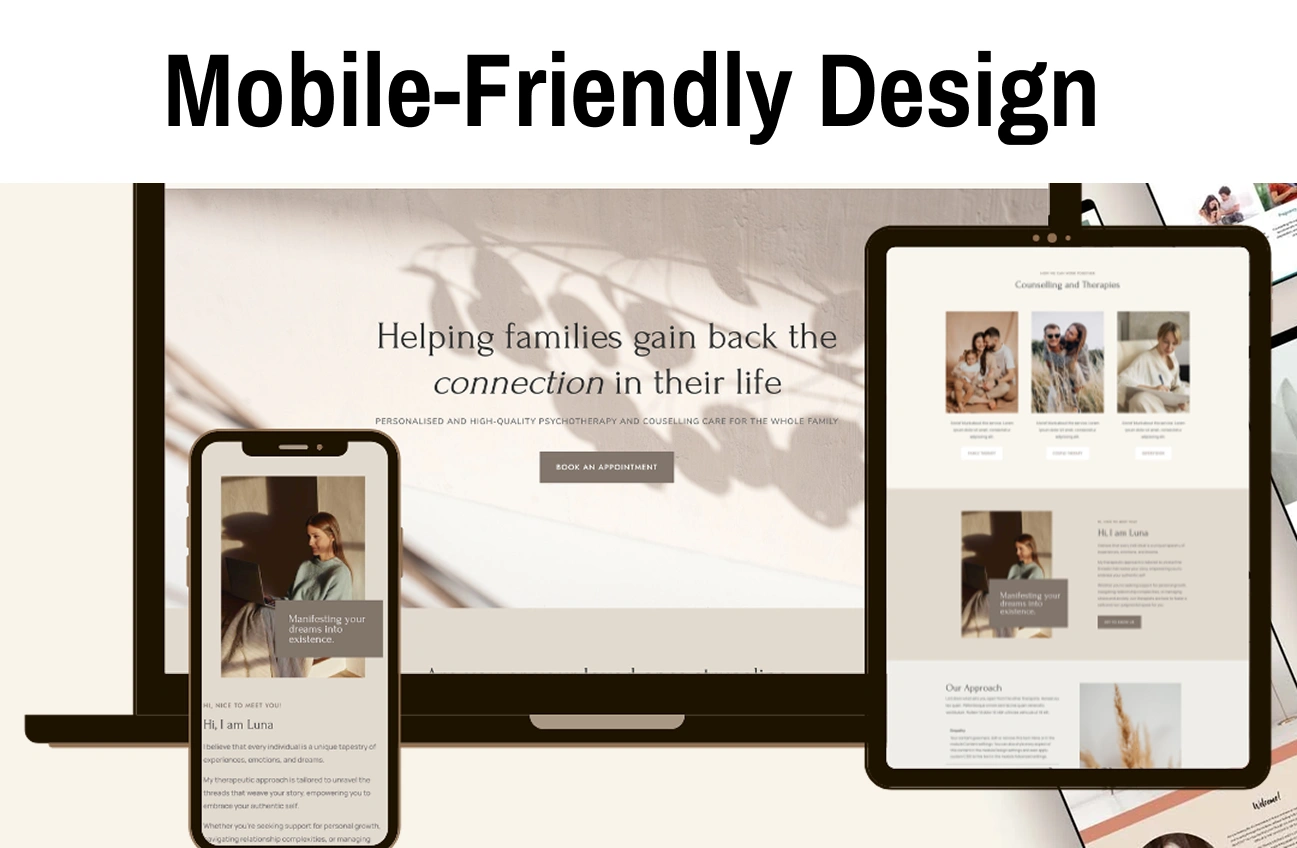
More than half of all website traffic now comes from mobile devices, and this is especially true for people searching for therapists. Someone might be looking for help during a lunch break, late at night when they can’t sleep, or in a moment of crisis while away from their computer.
Your responsive website must work perfectly on phones and tablets. This means more than just shrinking your desktop site to fit a smaller screen. True mobile optimization considers how people use their phones differently than computers.
Mobile design essentials:
- Text large enough to read without zooming (minimum 16px)
- Buttons and links large enough to tap easily with a thumb
- Forms that are simple to fill out on a small keyboard
- Phone numbers that become tappable click-to-call links
- Fast loading times even on slower mobile connections
- Images that scale appropriately without slowing the page
- Navigation that works smoothly with touch gestures
Test your website on actual mobile devices, not just by shrinking your browser window. The experience should feel designed for mobile, not just adapted for it.
Consider that someone viewing your site on their phone might be in a vulnerable moment. The easier you make it to reach you, the more likely they are to take that step.
9. Website Speed and Smooth Interactions for a Stress-Free Experience
You have about three seconds to make a first impression before an impatient visitor leaves your site. Slow loading times don’t just frustrate people—they undermine trust. If your website feels sluggish or unresponsive, visitors subconsciously wonder if working with you will feel the same way.
Fast-loading therapy websites show respect for visitors’ time and emotional state. When someone is struggling and looking for help, every second of waiting can feel like an eternity.
Speed optimization strategies:
- Optimize images to reduce file sizes without losing quality
- Use modern image formats like WebP when possible
- Minimize the number of plugins or scripts running on each page
- Choose quality web hosting that delivers fast server response times
- Enable browser caching so returning visitors load pages faster
- Reduce redirects and eliminate broken links that waste time
Smooth interactions matter too. Buttons should respond immediately when clicked. Forms should provide instant feedback when submitted. Page transitions should feel seamless, not jarring. These micro-interactions might seem small, but they add up to an overall feeling of polish and professionalism.
Run regular speed tests using tools like Google PageSpeed Insights. Aim for load times under three seconds on both desktop and mobile.
10. Accessibility Features That Make Clients Feel Considered
Accessibility isn’t just about legal compliance—it’s about making sure everyone who needs your help can access it. People with disabilities are actually more likely to benefit from therapy, yet many therapy websites inadvertently exclude them through poor design choices.
Inclusive features are a critical part of healthcare website design, improving usability and ensuring everyone can access your services comfortably. Accessibility is a core part of modern website designs, improving usability for everyone.
Key accessibility considerations:
- Sufficient color contrast between text and background for people with vision impairments
- Alt text for all images so screen readers can describe them to blind users
- Keyboard navigation for people who can’t use a mouse
- Captions or transcripts for any video or audio content
- Clear, simple language that’s easy for everyone to understand
- Consistent navigation and layout that’s predictable and learnable
- Forms with clear labels and error messages that help people complete them successfully
- Avoiding flashing or moving content that could trigger seizures
Small font sizes, low-contrast text, and images with critical information all create barriers. When you remove these barriers, you send a powerful message: everyone is welcome here.
Consider including a brief accessibility statement on your website explaining your commitment to inclusive design and providing a way for people to report issues or request accommodations.
11. Ethical, Supportive CTAs That Encourage — Not Pressure
Calls to action (CTAs) are the bridges between interest and action, but they need careful wording in mental health contexts. Aggressive marketing language that works for retail or services can feel manipulative or pushy when someone is considering therapy.
Your therapy practice call-to-action should invite rather than demand, encourage rather than pressure, and support rather than sell. The tone should acknowledge that reaching out takes courage while making that step feel safe and manageable.
Effective CTAs for therapist websites:
- “Take the first step” instead of “Sign up now”
- “Schedule a free consultation” instead of “Book today”
- “Let’s talk about how I can help” instead of “Start therapy immediately”
- “Reach out when you’re ready” instead of “Don’t wait another day”
- “Explore if we’re a good fit” instead of “Commit to change now”
Offer low-pressure options alongside direct booking. A phone call, email exchange, or brief consultation lets potential clients ease into the relationship rather than feeling forced into an immediate commitment.
Place CTAs thoughtfully rather than aggressively. They should appear naturally at decision points in your content, not interrupt important information. One or two clear CTAs per page is usually sufficient—more than that can feel overwhelming.
Remember that someone might visit your website multiple times before reaching out. Each visit builds familiarity and trust, so don’t treat every visitor like they need to take action immediately.
12. SEO Essentials for Therapist Websites
Even the most beautifully designed website won’t help anyone if they can’t find it. Search engine optimization (SEO) ensures that when people in your area search for the help you provide, your SEO-friendly website structure helps your site rank higher and reach more clients.
Therapist website SEO focuses on local visibility and specific specializations. Most people search for therapists near them, so location-based optimization is crucial. Similarly, people often search for specific issues (“anxiety therapist,” “trauma counselor,” “couples therapy”) rather than just “therapist.”
Basic SEO strategies that build trust:
- Include your location and specialties in page titles and headings
- Create dedicated pages for each service you offer with detailed, helpful information
- Write naturally helpful content, not keyword-stuffed paragraphs
- Claim and optimize your Google Business Profile with accurate information
- Encourage satisfied clients to leave reviews (following ethical guidelines)
- Include your practice name, address, and phone number consistently across all pages
- Create a blog that answers common questions your ideal clients have
- Ensure your website loads quickly and works perfectly on mobile devices
Focus on therapy website content strategy that genuinely helps people. Write about topics your ideal clients are struggling with. Answer their questions thoroughly. Provide real value rather than just trying to rank for keywords.
Local directories and professional listings also matter. Make sure your practice appears on Psychology Today, Good Therapy, and other therapist directories with consistent information and a link back to your website.
SEO takes time, but it’s one of the most cost-effective ways to ensure people who need your specific expertise can find you.
Why Choose Mandy Web Design for Your Therapy Website?
Mandy Web Design is a trusted website designing agency known for creating calm, client-friendly websites that build confidence from the very first click. We focus on designs that feel warm, safe, and easy to navigate—helping therapists connect with clients who need clarity and comfort during their online search for support.
We offer affordable website design packages, making it easier for new and growing therapy practices to build a strong online presence without high costs. Our pricing is transparent, beginner-friendly, and tailored to your needs, offering professional results while keeping website designing cost affordable, starting from just ₹13,000. This ensures you get a professional, trustworthy website that feels right for your practice and your budget.
We are a full-suite web design company offering a complete range of web design services to support your growth. Our services include custom website design, UI/UX design, WordPress web design, ecommerce web design, website redesign, responsive website design, and website maintenance services—giving you everything you need to create a smooth, modern, and reliable online experience for your clients.
Ready to Build Client-Trusting Therapist Website?
Build a therapist website with our expert web designers that makes clients feel safe, welcomed, and ready to connect!
FAQs About Therapist Website Design
Therapist website design creates calming, professional websites that build client trust. It combines colors, layouts, and navigation to ensure visitors feel safe. Mandy Web Design specializes in crafting these websites with attention to detail, offering cost-effective solutions for growing therapy practices.
Costs vary based on features, design, and functionality. Mandy Web Design offers complete therapist website solutions starting from just Rs 13,000, including professional design, usability, responsive layout, and essential features that clients trust.
Trust encourages clients to reach out, especially when feeling vulnerable. A professional, welcoming website fosters credibility. Mandy Web Design builds trust through subtle design details while providing affordable packages starting from just Rs 13,000.
Clients feel safe with simple navigation, soft colors, calming layouts, and authentic photos. Each element reduces anxiety. Mandy Web Design ensures these details work together professionally while keeping costs reasonable for therapists.
Colors affect emotions, helping clients feel calm and reassured. Soft, consistent tones build trust and reflect professionalism. Mandy Web Design selects colors thoughtfully, balancing emotional impact and cost-efficiency for every therapy website.
A user-friendly website has easy navigation, clear text, and simple booking options. It reduces stress for clients. Mandy Web Design focuses on usability while offering affordable, transparent pricing for professional therapy websites.
Yes, authentic and warm photos help clients connect emotionally and feel trust. Mandy Web Design integrates visuals professionally and cost-effectively, ensuring a welcoming online presence without unnecessary expenses.
Mobile-friendly websites allow clients to navigate easily on any device. Mandy Web Design creates responsive therapy websites that function smoothly across devices while keeping your project within budget.

About the Writer
Abhishek Thakur
Sr. Content Writer at Mandy Web Design
Abhishek Thakur is the Senior Content Writer at Mandy Web Design, where he crafts engaging content for the company’s website, blog, and marketing campaigns. With 5+ years of experience in digital marketing and SEO content creation, he specializes in turning complex topics into easy-to-understand, actionable strategies that help businesses grow online. He is passionate about creating high-quality, value-driven content that connects with audiences and builds brand authority. When he’s not writing, he enjoys exploring new ideas, learning the latest marketing trends, and improving his creative skills.