

Landscaping website design plays a big role in bringing new local customers to your business. When people need lawn care or landscaping services, they usually search online first. If your website looks good, loads fast, and is easy to use, more visitors will trust your business and contact you.
A well-designed landscaping website should clearly show your services, your service area, and your past work. It should also make it easy for visitors to call you, fill out a form, or ask for a quote. Simple layouts, clean images, fast speed, and mobile-friendly design help turn website visitors into real local leads.
In this blog, you will learn easy and proven website design strategies to help your landscaping business get more local leads. These tips will help you improve your website, attract nearby customers, and grow your business steadily with better online visibility.
Why Your Landscaping Website Is Your Most Important Marketing Tool
Your landscaping website serves as your digital storefront and often creates the first impression potential customers have of your business. In today’s competitive landscaping industry, homeowners and property managers research multiple companies before making a decision. Your website needs to stand out from competitors and immediately communicate professionalism, reliability, and quality service.
A professional landscaping website design created through a structured website designing process does more than just look attractive. It builds credibility, showcases your expertise, and demonstrates the value you bring to customers. When someone searches for “landscaping services near me” or “lawn care company in [city],” your website should convince them within seconds that you’re the right choice. Without a strong online presence, you’re essentially invisible to the majority of potential customers who rely on internet searches to find local service providers.
Modern consumers expect businesses to have an informative, user-friendly website. If your landscaping company lacks a quality website or has an outdated design, potential customers may question your professionalism and choose a competitor instead. Your website works around the clock, generating leads even when you’re sleeping, making it one of the most cost-effective marketing investments for your landscaping business.
Understanding Your Local Target Audience and Their Search Behavior
Before implementing specific design strategies, it’s essential to understand how your local target audience searches for landscaping services online. Most homeowners looking for landscaping help start with location-based searches on Google. They use phrases like “landscaping contractor near me,” “best lawn care service in [city name],” or “landscape design [neighborhood].” Understanding these search patterns helps you optimize your website content and structure.
Your local customers typically fall into several categories: homeowners maintaining residential properties, businesses needing commercial landscaping, property managers overseeing multiple locations, and homeowners preparing to sell their homes. Each group has different needs and pain points. Residential customers often search during evenings and weekends, looking for lawn maintenance, seasonal cleanup, garden design, or hardscaping projects. Commercial clients search during business hours and prioritize reliability, professionalism, and consistent service.
The customer journey usually begins with awareness when they realize they need landscaping help. Then they move to consideration, comparing different companies and services. Finally, they reach the decision stage where they’re ready to request a quote or schedule a consultation. Your landscaping website design should address each stage, providing the right information at the right time to guide visitors toward becoming paying customers.
Essential Website Design Strategies for Generating Local Landscaping Leads
1. Mobile-Responsive Design for On-the-Go Customers
More than 60% of local searches happen on mobile devices, making a mobile responsive website essential for attracting and converting local customers. Your landscaping website must look perfect and function smoothly on smartphones and tablets. Mobile-responsive design automatically adjusts your website layout, images, and content to fit any screen size. When potential customers search for “landscape companies near me” on their phones, they expect websites to load quickly and display properly.
A mobile-friendly landscaping website should have large, easy-to-tap buttons for calling or requesting quotes. Phone numbers should be clickable, allowing visitors to call you with one tap. Navigation menus should be simplified for smaller screens, and contact forms should be easy to fill out on mobile devices. Google also prioritizes mobile-friendly websites in search results, meaning responsive design directly impacts your local SEO rankings and visibility.
Test your website on multiple devices regularly. Check loading speeds, image quality, button functionality, and form submissions. Many landscaping companies lose potential leads simply because their website doesn’t work properly on mobile devices. Investing in professional mobile-responsive design pays for itself through increased lead generation and better conversion rates.
2. Fast Loading Speed to Reduce Bounce Rate
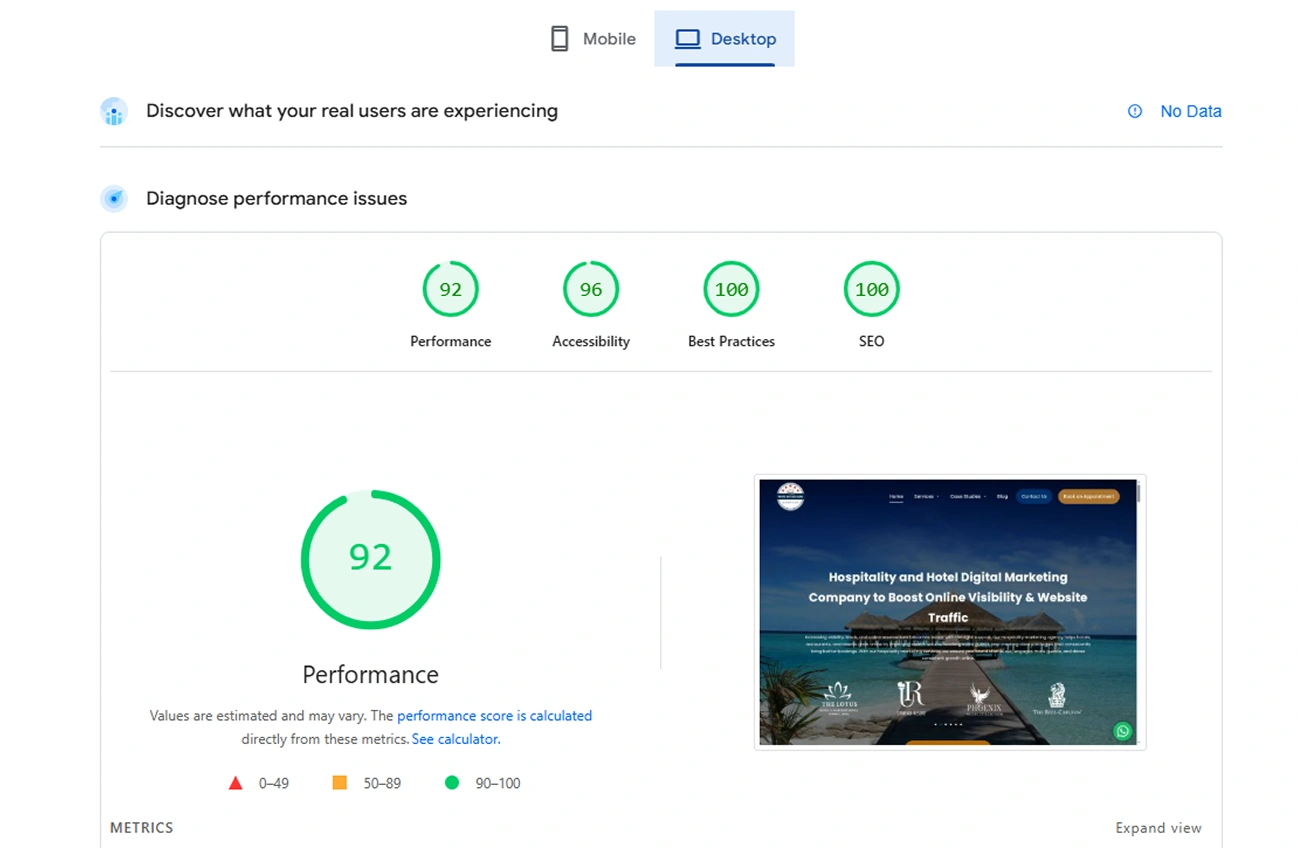
Website speed directly affects lead generation. Studies show that 53% of mobile users abandon websites that take longer than three seconds to load. When someone searches for landscaping services, they’re comparing multiple companies quickly. If your website loads slowly, they’ll move on to a competitor before even seeing your content.
Optimize your landscaping website speed by compressing images without losing quality through proper image optimization, minimizing code, enabling browser caching, and choosing reliable hosting. Large, unoptimized photos of landscaping projects can significantly slow down your site. Use modern image formats and ensure pictures load progressively. Consider lazy loading for images below the fold, so they only load when visitors scroll down.
Fast websites also rank better in Google search results. Page speed is a confirmed ranking factor for both desktop and mobile searches. When your landscaping website loads quickly, visitors stay longer, view more pages, and are more likely to contact you. Monitor your website speed regularly using free tools and address any issues immediately to maintain optimal performance.
3. Clear and Compelling Call-to-Action Buttons
Every page on your landscaping website should guide visitors toward taking action. Call-to-action (CTA) buttons like “Get Free Quote,” “Call Now,” “Schedule Consultation,” or “Request Estimate” should be prominently displayed and easy to find. Use contrasting colors that stand out from your website’s background, making CTA buttons immediately visible.
Position call-to-action buttons strategically throughout your website. Place them above the fold on your homepage so visitors see them immediately without scrolling. Include CTAs at the end of service descriptions, within blog posts, and on your contact page. Each button should use action-oriented language that creates urgency and clearly states what happens next.
Test different CTA button colors, wording, and placements to see what generates the most leads. Some landscaping companies find that “Get Your Free Quote Today” converts better than simply “Contact Us.” Make your phone number clickable and visible in your website header on every page. The easier you make it for potential customers to contact you, the more local leads you’ll generate from your website traffic.
4. Showcase High-Quality Before and After Photos
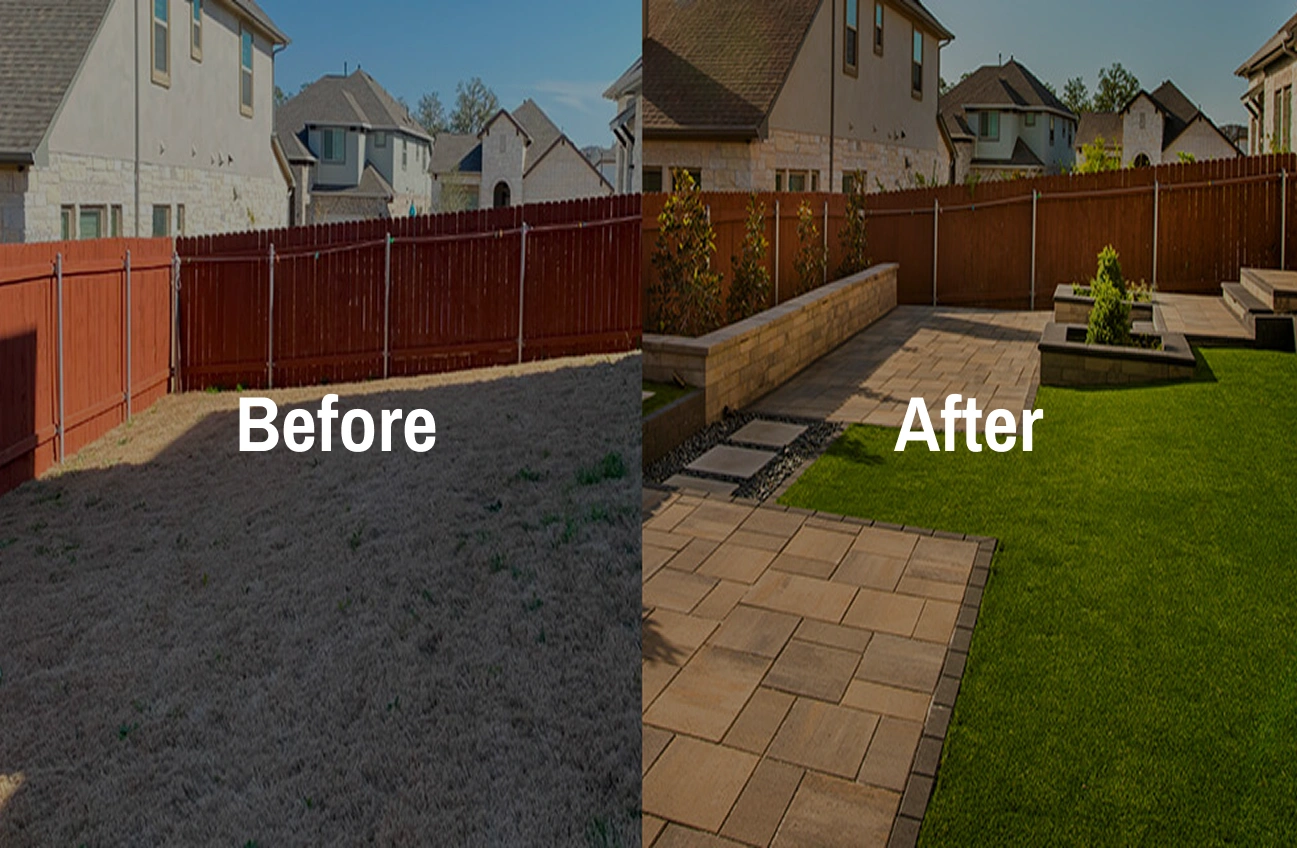
Visual content is incredibly powerful for landscaping businesses. Before and after photos demonstrate your expertise, quality of work, and the transformation you provide. Create a dedicated portfolio or gallery section showcasing your best projects with clear, professional photographs. Organize photos by service type, such as lawn maintenance, landscape design, hardscaping, or seasonal cleanups.
Each project photo should include a brief description explaining the work performed, challenges overcome, and results achieved. Add location information (city or neighborhood) to help local searchers find relevant examples near them. High-quality images build trust and help potential customers visualize what you could do for their property.
Optimize all images for web use by compressing file sizes without sacrificing visual quality. Add descriptive alt text to each image using relevant keywords like “landscape design in [city]” or “backyard patio installation [location].” This improves your website’s SEO and helps visually impaired users understand your content. Regularly update your portfolio with recent projects to show that your business is active and current.
5. Service Pages Optimized for Local SEO
Create separate, detailed pages for each landscaping service you offer. Instead of listing all services on one page, develop individual pages for lawn care, landscape design, hardscaping, tree trimming, irrigation systems, seasonal cleanup, and other services. Each page should include comprehensive information about that specific service, benefits, process, pricing considerations, and relevant photos.
Optimize service pages with local keywords naturally incorporated into content. Use phrases like “lawn care services in [city name],” “landscape design [neighborhood],” or “hardscaping contractor serving [area].” Include location-specific information that demonstrates your local expertise and service area coverage. This helps your pages rank for location-based searches that local customers use.
Structure service pages with clear headings, bullet points, and short paragraphs for easy scanning within an SEO-friendly website structure. Answer common questions customers have about each service. Include clear calls-to-action encouraging visitors to request quotes or schedule consultations. Well-optimized service pages attract targeted local traffic and convert visitors into leads more effectively than generic service listings, a strategy used by the top web design companies.
6. Embedded Google Maps and Service Area Information
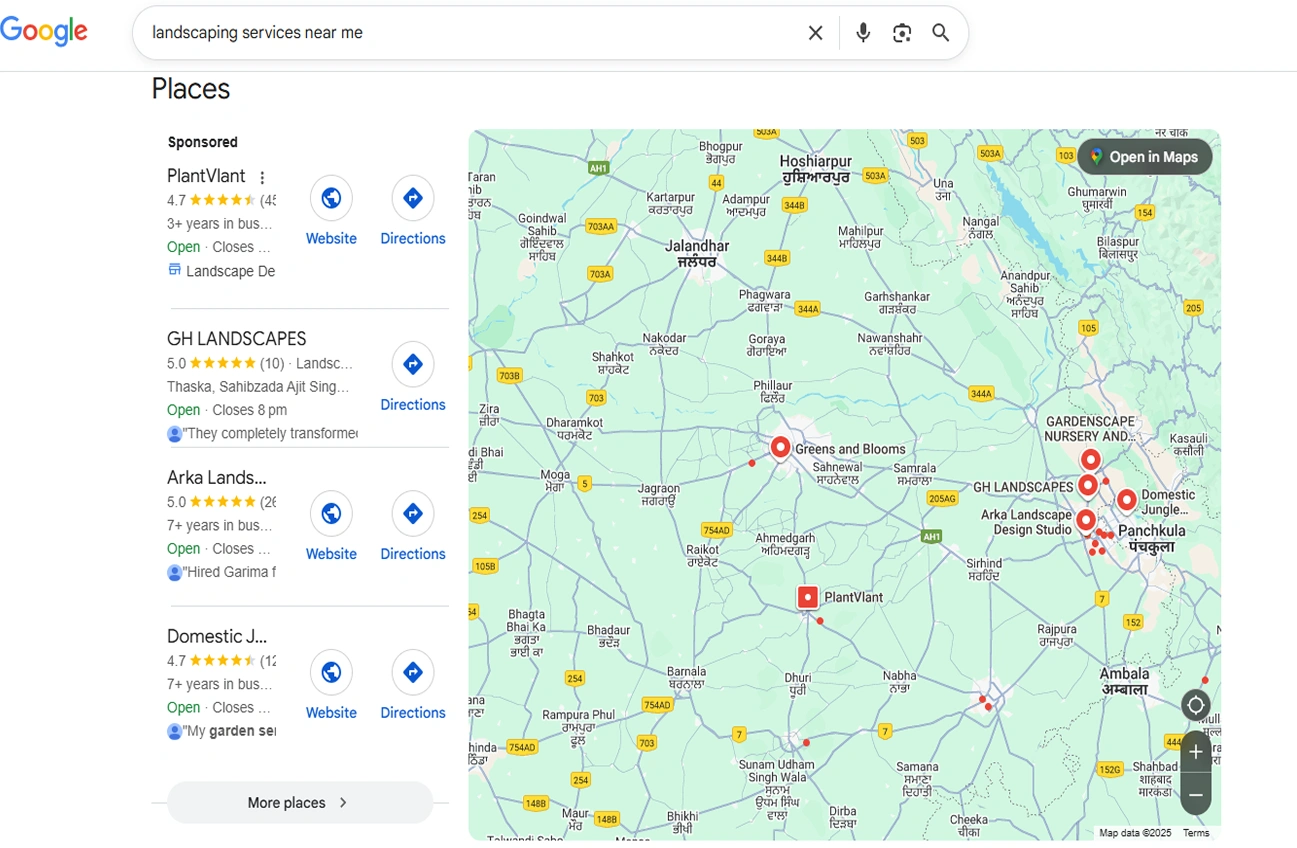
Make your location and service area crystal clear on your website. Embed a Google Map on your contact page so visitors can drop a pin on Google maps showing your business location. This helps with local SEO and provides visual confirmation that you’re a legitimate local business. Many customers prefer working with nearby landscaping companies for faster response times and local area knowledge.
Create a dedicated service area page listing all cities, neighborhoods, and zip codes you serve. Organize this information logically, perhaps by county or region. Include brief descriptions of your work in different areas if possible. This page helps visitors quickly determine if you service their location and improves your website’s ranking for various location-based searches.
Consider adding location-specific landing pages for major cities or towns you serve. Each page can highlight your services in that area, include relevant photos from projects there, and incorporate local keywords. This strategy significantly improves your visibility in local search results and attracts more qualified leads from different parts of your service area.
7. Customer Testimonials and Reviews
Social proof powerfully influences purchasing decisions. Display customer testimonials prominently on your landscaping website, especially on your homepage and service pages. Include the customer’s name, location (city or neighborhood), and photo if possible. Authentic testimonials from real local customers build trust and credibility with potential clients researching your services.
Integrate reviews from Google My Business, Facebook, Yelp, or other platforms directly into your website. Many website builders and plugins allow automatic review feeds that keep content fresh. Respond professionally to all reviews, both positive and negative, demonstrating your commitment to customer satisfaction. Potential customers often read responses to gauge how you handle feedback.
Create case studies for particularly impressive projects. These in-depth stories describe the customer’s problem, your solution, the implementation process, and the final results. Case studies provide detailed proof of your expertise and problem-solving abilities. They also generate substantial content that improves your SEO and keeps visitors engaged longer on your website.
8. Easy-to-Use Contact Forms and Quote Requests
Simplify the process for potential customers to reach out. Create short, simple contact forms asking only for essential information: name, phone number, email, service needed, and property location. Long forms with too many required fields discourage submissions and reduce lead generation. Every additional field decreases conversion rates.
Offer multiple contact options to accommodate different preferences. Some customers prefer calling, others want to submit forms, and some might use email or text. Display your phone number prominently with click-to-call functionality on mobile devices. Consider adding a live chat feature for real-time communication, though this requires someone to monitor and respond promptly.
Create a dedicated quote request page with slightly more detailed questions to help you provide accurate estimates. Ask about property size, specific services needed, preferred timing, and budget range. Include a message box for additional details. Ensure all forms send immediate confirmation emails to customers and notifications to your team. Fast response times to form submissions significantly improve your chances of converting leads into customers.
9. Local SEO Optimization Throughout Your Website
Local search engine optimization helps your landscaping website appear in search results when nearby customers look for services. Start by claiming and optimizing your Google Business Profile with accurate information, regular posts, and customer reviews. This profile appears in Google Maps and local search results, driving significant traffic to your website.
Incorporate location-based keywords naturally throughout your website content, page titles, meta descriptions, and image alt text. Don’t overstuff keywords, but use them where they make sense contextually. Create blog content addressing local landscaping topics, seasonal tips for your climate, and plant varieties suitable for your region. This demonstrates local expertise and attracts organic search traffic.
Build local citations by listing your landscaping business in online directories like Yelp, Angie’s List, HomeAdvisor, and chamber of commerce websites. Ensure your business name, address, and phone number (NAP) are identical across all platforms. Inconsistent information confuses search engines and can hurt your local rankings. Acquire backlinks from local organizations, suppliers, and complementary businesses to boost your website’s authority.
10. Trust Signals and Professional Credentials
Display licenses, certifications, insurance information, and professional affiliations prominently on your website. These credentials build trust and differentiate your landscaping business from unlicensed competitors. Create an “About Us” page telling your company story, introducing your team, and highlighting your experience, training, and commitment to quality.
Include trust badges and security symbols if you process payments online. Display associations you belong to, such as local business groups, landscape contractor associations, or trade organizations. Awards, recognitions, and years in business all serve as trust signals that encourage potential customers to choose your company.
Add a frequently asked questions (FAQ) section addressing common concerns about landscaping services, pricing, timelines, and processes. Thorough answers demonstrate transparency and expertise while reducing the time you spend answering repetitive questions. FAQs also provide additional content that improves your SEO and helps your website rank for question-based searches.
11. Engaging Blog Content for Local Audiences
Regularly publishing blog posts establishes your landscaping company as a local expert and improves your website’s SEO. Write about seasonal landscaping tips, plant care advice for your region, common lawn problems in your area, landscape design trends, and before-and-after project stories. Each blog post should target relevant keywords that local customers search for.
Create content addressing the specific needs and challenges of your local climate, soil conditions, and seasonal changes. Articles like “Best Drought-Resistant Plants for [Region]” or “Spring Landscaping Checklist for [City] Homeowners” attract local search traffic and provide genuine value. Include internal links to relevant service pages, guiding readers toward conversion actions.
Maintain a consistent publishing schedule, whether weekly, biweekly, or monthly. Quality matters more than quantity, so focus on creating comprehensive, helpful content rather than frequent short posts. Promote blog posts through social media and email newsletters to drive traffic back to your website. Well-written blog content generates ongoing organic traffic and leads long after publication.
12. Video Content Showcasing Your Expertise
Video content engages visitors more effectively than text alone and can significantly boost lead generation. Create short videos showcasing completed projects, explaining your services, offering landscaping tips, or introducing your team. Videos keep visitors on your website longer, which signals quality to search engines and improves your rankings.
Post time-lapse videos of landscaping transformations, how-to guides for basic lawn care, or seasonal maintenance tips. These videos demonstrate your expertise and build trust with potential customers. Host videos on YouTube (for additional SEO benefits) and embed them on relevant website pages. Optimize video titles, descriptions, and tags with local keywords.
Keep videos concise and professionally produced, even if using smartphone footage. Ensure good lighting, clear audio, and stable shots. Add captions for accessibility and to help viewers watching without sound. Include calls-to-action within or after videos, directing viewers to contact you for services. Video content differentiates your landscaping website from competitors and creates deeper connections with potential customers.
Ready to Make Your Landscaping Business Stand Out Online?
Boost your online presence with a modern, clean, and professional website that showcases your services, highlights client testimonials, and drives more local leads to your business!
Building Trust and Credibility Through Website Design Elements
Beyond individual strategies, your overall website design should communicate professionalism and reliability. Use modern website designs with a clean, organized layout that’s easy to navigate to enhance website UI and improve the overall user experience.
Choose a color scheme reflecting your brand that’s pleasant and not overwhelming. Green tones naturally fit landscaping businesses, but incorporate complementary colors that make important elements stand out.
Typography and color matter more than many realize. Use readable fonts in appropriate sizes, ensuring text is easy to read on all devices. Avoid decorative fonts that sacrifice legibility. Maintain consistent styling throughout your website for headings, body text, and calls-to-action. White space (empty space around elements) improves website design layouts, making your content easier to scan and less cluttered.
Professional photography sets you apart from competitors using stock images. Invest in quality photos of your actual work, team, and equipment. Authentic images build trust because visitors can see real results you’ve achieved for local customers. Stock photos of generic landscaping scenes don’t showcase your unique work or local expertise.
Security is increasingly important for all websites. Install an SSL certificate so your website uses HTTPS, which encrypts data and displays a padlock icon in browsers. This is essential if you collect any customer information through forms. Google favors secure websites in search rankings, and visitors are more likely to trust and submit information to secure sites.
Measuring Success and Continuously Improving Your Landscaping Website
Creating a great landscaping website isn’t a one-time project but an ongoing process of testing, measuring, and improving, ensuring your web design cost continues to deliver results. Use Google Analytics to track important metrics like website traffic, traffic sources, most visited pages, average time on site, and bounce rate. Understanding how visitors interact with your website helps identify what’s working and what needs improvement.
Set up conversion tracking for important actions like form submissions, phone calls from click-to-call buttons, and quote requests. This data shows which pages and traffic sources generate the most leads. If certain service pages or blog posts consistently convert visitors, create similar content. If pages have high traffic but low conversions, they need improvement.
Regularly test different elements through A/B testing. Try different CTA button colors, wording changes, form layouts, or page structures. Small changes can significantly impact conversion rates. For example, changing “Submit” to “Get My Free Quote” on a form button might increase submissions by 20% or more.
Collect feedback from customers about your website. Ask new clients how they found you and whether your website provided the information they needed. Use their insights to identify gaps in your content or confusing elements. Monitor competitors’ websites to see what strategies they’re implementing, but focus on differentiation rather than imitation.
Update your website regularly with fresh content, new project photos, current testimonials, and relevant blog posts. Search engines favor websites that are regularly updated with new content. An outdated website with old copyright dates and outdated information suggests your business might not be active or current. Keep your portfolio fresh by adding recent projects and removing older ones as needed.
Build a Landscaping Website That Attracts, Converts, and Grows
A professionally designed landscaping website is one of the most powerful tools for generating local leads and growing your business. By implementing these strategies—mobile responsiveness, fast loading speeds, clear calls-to-action, high-quality visuals, local SEO optimization, and trust-building elements—you create a website that attracts, engages, and converts potential customers.
Remember that your website works continuously to market your landscaping services, even when you’re focused on delivering excellent work to current customers. The investment in quality website design and ongoing optimization pays dividends through consistent lead generation and business growth.
Start by assessing your current website against these strategies. Identify areas needing improvement and prioritize changes that will have the biggest impact on lead generation. Whether you’re building a new landscaping website from scratch or improving an existing one, focus on creating an exceptional user experience that clearly communicates your value and makes it easy for local customers to choose your services.
Your landscaping business deserves a website that incorporates the elements of good website design, showcases your expertise, builds trust with potential customers, and consistently generates quality local leads.Implement these proven strategies, measure your results, and continuously refine your approach to stay ahead of competitors and capture more market share in your local area.
Why Choose Mandy Web Design for Your Landscaping Website
Mandy Web Design is a professional website design company India known for creating high-performing, lead-focused websites for growing businesses. We specialize in designing websites that are not just visually appealing but also built to convert visitors into real customers. Our team understands what local service businesses need to succeed online, especially landscaping and home service companies that depend on consistent local leads.
We believe that professional website design should be affordable for every business. That’s why our web designing packages start from just Rs 13,000, making it easy for small and medium businesses to build a strong online presence without high upfront costs. Despite the affordable pricing, we never compromise on quality, performance, or user experience.
Mandy Web Design offers complete web solutions including custom web design, UI/UX design, WordPress design, responsive design, website redesign, and website maintenance. We also provide web design services for every home service industry such as landscaping, plumbing, electrical, HVAC, cleaning, roofing, pest control, and locksmith, helping local businesses grow with powerful, conversion-focused websites.
Ready to Get More Local Leads From Your Landscaping Website?
Let’s build a professional, lead-focused website that attracts nearby customers, highlights your services, and turns visitors into paying clients, helping your landscaping business grow steadily online!
FAQs About Landscaping Website Design
A professional website acts as your digital storefront, creating first impressions, showcasing completed projects, building credibility, and establishing trust. It helps potential clients easily find services, contact you, and convert into leads, making it an essential marketing tool for local growth.
Essential features include mobile responsiveness, fast loading speed, clear navigation, service pages optimized for local SEO, high-quality before-and-after images, contact forms, Google Maps integration, testimonials, calls-to-action, and a blog to engage visitors and attract local clients effectively.
Optimize your website for local search by using location-based keywords, listing service areas, embedding Google Maps, sharing client testimonials, and creating relevant local content. These strategies improve visibility, attract nearby customers, and encourage visitors to request quotes or schedule consultations.
Most potential clients search for services on smartphones or tablets. A mobile-responsive website ensures content, images, and forms display correctly on any device, improves user experience, reduces bounce rates, and positively impacts search rankings, helping you generate more leads locally.
Before-and-after photos visually demonstrate your skills, showcase transformations, and build trust with potential clients. They provide proof of expertise, help visitors understand your capabilities, and make your website more engaging, increasing the likelihood of inquiries and conversions.
Slow websites frustrate visitors and increase bounce rates, causing potential clients to leave before seeing services. Fast-loading pages keep users engaged, improve SEO rankings, enhance user experience, and ensure visitors can quickly access information and contact your business for services.
A user-friendly website has intuitive navigation, clear headings, readable fonts, organized content, strategically placed calls-to-action, simple forms, and fast-loading pages. It allows visitors to find relevant services quickly, contact you easily, and feel confident about choosing your landscaping business.
Local SEO targets potential clients searching for services nearby, optimizing your website with location-specific keywords, Google Maps integration, service area pages, and reviews. It boosts visibility in local search results, attracting qualified leads and increasing conversion opportunities.

About the Writer
Abhishek Thakur
Sr. Content Writer at Mandy Web Design
Abhishek Thakur is the Senior Content Writer at Mandy Web Design, where he crafts engaging content for the company’s website, blog, and marketing campaigns. With 5+ years of experience in digital marketing and SEO content creation, he specializes in turning complex topics into easy-to-understand, actionable strategies that help businesses grow online. He is passionate about creating high-quality, value-driven content that connects with audiences and builds brand authority. When he’s not writing, he enjoys exploring new ideas, learning the latest marketing trends, and improving his creative skills.