
Objective;
The objective of this blog is to guide resort businesses in creating a visually appealing, mobile-friendly, and conversion-focused website, helping attract more travelers, improve user experience, and increase direct bookings effectively.
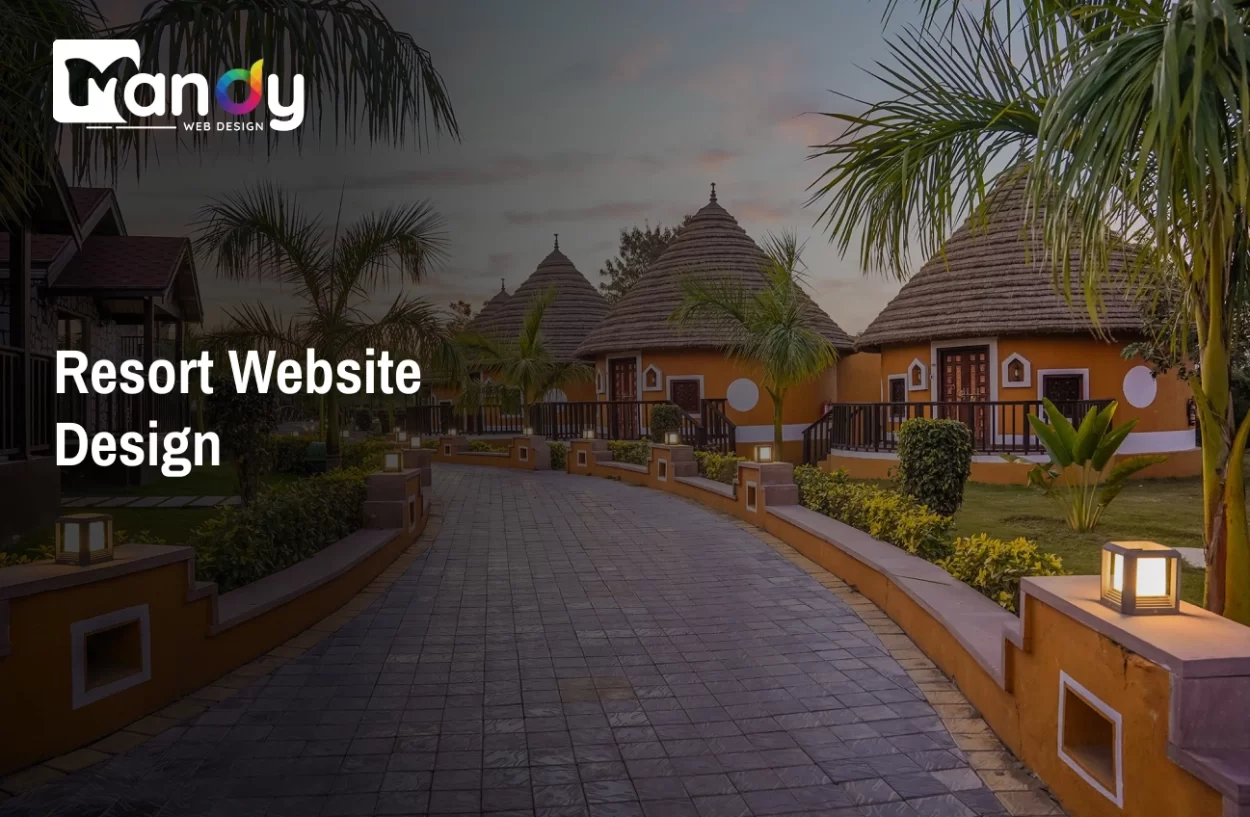
Resort website design is the process of creating an online space that shows your property, attracts travelers, and encourages them to book their stay. For many guests, your website is the first interaction they have with your resort. It should clearly present what you offer while giving a smooth and enjoyable browsing experience.
Did you know? 70% of travelers prefer using mobile apps or mobile-friendly sites for travel planning and booking, meaning mobile responsiveness can directly impact resort website performance.
A good resort website combines beautiful visuals with easy navigation and useful details. Visitors want to quickly find information about rooms, prices, amenities, dining, activities, and nearby attractions. The site must also load fast, work well on mobile devices, and include a simple and secure booking system.
This step-by-step guide will help resort businesses understand how to plan, design, and improve their website. By following the right approach, you can attract more travelers, build trust, and turn website visitors into confirmed guests.
Build Your Dream Resort Website with Mandy Web Design - Starting From $10/Hour.
Key Takeaways
- A well-designed resort website attracts more travelers and boosts direct bookings.
- Mobile responsiveness, fast loading, and easy navigation enhance user experience.
- High-quality visuals, SEO optimization, and trust signals improve engagement and credibility.
- Professional web design services help create a modern, conversion-focused website tailored to your resort.
Table of Contents
- Why Resort Website Design Matters More Than Ever
- Step 1 – Define Your Resort Brand & Target Audience
- Step 2 – Plan a Conversion-Focused Website Structure
- Step 3 – Use Visual Design That Sells the Experience
- Step 4 – Make Navigation Effortless
- Step 5 – Mobile-First Resort Website Design
- Step 6 – Add an Easy & Secure Online Booking System
- Step 7 – Showcase Trust & Credibility
- Step 8 – Optimize for Speed & Performance
- Step 9 – SEO for Resort Websites
- Step 10 – Add Features That Increase Bookings
- Step 11 – Focus on Accessibility & User Experience
- When to Hire a Resort Website Design Agency
- Grow Your Resort Website with Mandy Web Design
- FAQs About Resort Website Design
Why Resort Website Design Matters More Than Ever
The travel industry has shifted dramatically toward digital research and online bookings. Most travelers now compare multiple resorts, read reviews, browse photos, and make reservations entirely online before ever speaking to a staff member. Your website serves as your 24/7 sales representative, working to convert browsers into bookers around the clock.
A poorly designed website creates immediate doubt. Slow loading times, confusing menus, outdated photos, or broken booking links send potential guests straight to your competitors. On the other hand, a well-designed resort website builds confidence, showcases your unique offerings, and removes barriers to booking.
Why your resort website is critical:
- First impressions form in milliseconds – Visitors judge your professionalism instantly based on design quality
- Mobile browsing dominates – The importance of responsive website design cannot be overstated as guests browse from smartphones while planning trips
- Direct bookings increase profits – A strong website reduces dependency on commission-heavy online travel agencies
- Trust building happens online – Your digital presence establishes credibility before guests ever contact you
- Competition is just a click away – If your site doesn’t meet expectations, competitors are immediately accessible
Your website also plays a crucial role in controlling your distribution costs. While online travel agencies bring visibility, they also take significant commissions. A strong website with direct booking capabilities reduces your dependency on third-party platforms and improves your profit margins on each reservation.
Step 1 – Define Your Resort Brand & Target Audience
The travel industry has shifted dramatically toward digital research and online bookings. Most travelers now compare multiple resorts, read reviews, browse photos, and make reservations entirely online before ever speaking to a staff member. Your website serves as your 24/7 sales representative, working to convert browsers into bookers around the clock.
A poorly designed website creates immediate doubt. Slow loading times, confusing menus, outdated photos, or broken booking links send potential guests straight to your competitors. On the other hand, a well-designed resort website builds confidence, showcases your unique offerings, and removes barriers to booking.
Why your resort website is critical:
- First impressions form in milliseconds – Visitors judge your professionalism instantly based on design quality
- Mobile browsing dominates – The importance of responsive website design cannot be overstated as guests browse from smartphones while planning trips
- Direct bookings increase profits – A strong website reduces dependency on commission-heavy online travel agencies
- Trust building happens online – Your digital presence establishes credibility before guests ever contact you
- Competition is just a click away – If your site doesn’t meet expectations, competitors are immediately accessible
Your website also plays a crucial role in controlling your distribution costs. While online travel agencies bring visibility, they also take significant commissions. A strong website with direct booking capabilities reduces your dependency on third-party platforms and improves your profit margins on each reservation.
Step 2 – Plan a Conversion-Focused Website Structure
Structure determines how easily visitors find information and move toward booking. A well-organized site guides guests naturally from initial interest to confirmed reservation. Poor structure frustrates users and increases abandonment rates.
Start with your main navigation menu. Keep it simple with five to seven primary categories that cover all essential information. Common top-level pages include Home, Accommodations, Dining, Activities, About, and Contact. Your booking function should be prominently accessible from every page, typically through a highly visible button in the header.
Essential pages for resort websites:
- Homepage – Stunning visuals, value proposition, and clear paths to key content
- Accommodations – Detailed room descriptions, photos, amenities, and pricing
- Dining & Bars – Restaurant options, menus, hours, and reservation information
- Activities & Amenities – On-property experiences and nearby attractions
- About Us – Resort history, mission, team, and what makes you special
- Special Offers – Packages, promotions, and seasonal deals
- Gallery – High-quality photo and video collections
- Contact & Directions – Multiple contact methods, map, and travel information
- FAQ – Answers to common questions about policies, amenities, and bookings
Consider the typical guest journey. Someone discovering your resort for the first time wants to see stunning visuals and understand what makes you special. They’ll look at room options and pricing. They’ll want to know what’s included, what activities are available, and what the surrounding area offers.
Think about your SEO friendly website structure from the beginning. Organize content logically with clear hierarchies. Use descriptive URLs that include relevant keywords. Plan your internal linking so important pages receive proper emphasis and visitors can easily navigate between related content.
Map out your entire site structure before building anything. A simple flowchart showing all pages and how they connect helps identify gaps, redundancies, and opportunities to improve the user experience.
Step 3 – Use Visual Design That Sells the Experience
Hospitality is inherently visual. Your website design must transport visitors to your property and help them imagine their stay. High-quality photography is your most powerful tool. Invest in professional photography that captures your resort during optimal lighting and weather conditions.
Types of visuals your resort website needs:
- Wide establishing shots – Show the full property, location, and surrounding landscape
- Room interiors – Multiple angles of each accommodation type highlighting key features
- Amenity close-ups – Pool details, spa facilities, fitness center, business center
- Dining experiences – Food presentation, restaurant ambiance, bar settings
- Activity shots – Guests enjoying experiences like golf, water sports, hiking
- Event spaces – Meeting rooms, wedding venues, banquet areas
- Lifestyle imagery – Real guests (with permission) enjoying authentic moments
- Seasonal variations – How your property looks throughout different times of year
Modern website design trends favor large, full-width hero images and immersive video backgrounds. Consider adding a short video to your homepage that showcases your resort’s atmosphere and key features. Keep it under 30 seconds and ensure it loads quickly without slowing down the page.
Your choice of color palettes should reflect your brand personality and create the right emotional response. Beach resorts often use blues and sandy neutrals. Mountain properties might embrace earth tones and rich greens. Luxury resorts frequently use sophisticated combinations of black, white, and metallics. Whatever you choose, maintain consistency across all pages.
Pay attention to white space. Don’t crowd every inch of screen with content. Strategic use of empty space makes designs feel more elegant and helps important elements stand out. This is a key element of good website design that many businesses overlook.
Step 4 – Make Navigation Effortless
Navigation determines whether visitors can find what they need without frustration. A confusing navigation system drives potential guests away, while intuitive navigation keeps them engaged and moving toward booking.
Navigation best practices for resort websites:
- Sticky header – Keep main menu visible as users scroll down the page
- Clear labels – Use descriptive terms like “Accommodations” rather than creative but vague words
- Logical grouping – Organize related content together under appropriate categories
- Breadcrumb trails – Show users their location within the site hierarchy
- Prominent search – Add search functionality for larger sites with extensive content
- Booking accessibility – Keep “Book Now” or “Check Availability” visible on every page
- Footer navigation – Include secondary links, contact info, and important policies
- Mobile menu – Implement clean, organized mobile navigation that’s easy to use with one hand
Your footer navigation should include links to important pages that visitors commonly seek: contact information, FAQs, policies, privacy statements, and social media profiles. The footer also provides an opportunity to include your physical address, phone number, and email for easy reference.
Create clear calls to action throughout the site. Every page should guide visitors toward the next logical step, whether that’s viewing room options, checking availability, or completing a booking. Use contrasting colors and clear text on buttons like “Check Availability,” “Book Now,” or “View Rooms.”
Step 5 – Mobile-First Resort Website Design
More than half of travel research and bookings now happen on mobile devices. Your resort website must work flawlessly on smartphones and tablets, not as an afterthought but as a primary design consideration.
Mobile responsive website design adapts your layout, images, and functionality to different screen sizes. Content that appears in three columns on desktop might stack vertically on mobile. Large images scale down appropriately. Buttons become larger and easier to tap with a finger.
Critical mobile optimization elements:
- Touch-friendly buttons – Minimum 44×44 pixels for easy tapping without mistakes
- Readable text – At least 16px font size without requiring zoom
- Simplified navigation – Hamburger menus or clean vertical navigation systems
- Fast loading – Compressed images and minimal code for quick page loads
- Click-to-call – Phone numbers that dial when tapped
- Tap-to-email – Email addresses that open email clients automatically
- Location integration – Addresses that link to map applications
- Optimized forms – Appropriate keyboards for each input type (numbers, email, dates)
- Horizontal scrolling – Eliminated completely for comfortable browsing
Test your site extensively on actual mobile devices, not just browser simulators. Check loading speeds, button functionality, form inputs, and image quality across different phones and tablets.
Consider the mobile user’s context. Someone browsing on their phone might be in the middle of planning, comparing properties quickly, or ready to book impulsively after a recommendation. Make your booking process fast and friction-free to capture these moments.
Page speed becomes even more critical on mobile devices, where connections may be slower. Compress images appropriately, minimize code, and eliminate unnecessary scripts. A delay of even a few seconds significantly increases mobile abandonment rates.
Want a Resort Website that Drives More Bookings?
Let Mandy Web Design craft a modern, responsive, and SEO-friendly website that turns visitors into guests!
Step 6 – Add an Easy & Secure Online Booking System
Your booking system is the most important conversion tool on your website. A complicated or untrustworthy booking process destroys all the good work your design and content accomplish.
Choose a booking engine that integrates seamlessly with your website’s design. It should look and feel like a natural part of your site, not a jarring transition to a third-party platform. Branded booking experiences build trust and reduce abandonment.
Essential booking system features:
- Real-time availability – Show accurate room availability and current pricing
- Simple interface – Minimal steps with clear progress indicators
- Guest type options – Adults, children, infants with appropriate configurations
- Room selection – Visual presentation of different accommodation options
- Rate plans – Display available packages, promotions, and standard rates
- Add-ons – Optional extras like breakfast, spa treatments, or activities
- Summary visibility – Constant display of selections, dates, and total cost
- Multiple payment methods – Credit cards, PayPal, digital wallets, bank transfers
- Currency options – Support for international guests with real-time conversion
- Guest accounts – Optional registration for faster future bookings
- Secure checkout – SSL encryption and visible trust badges
Make the booking process as simple as possible. Ask only for essential information: dates, room type, number of guests, contact details, and payment information. Every additional field increases friction and reduces completion rates.
Security is non-negotiable. Use SSL certificates to encrypt all data transmission. Display trust badges from payment processors and security companies. Include clear statements about how you protect customer information. Security concerns are a leading cause of booking abandonment.
Include clear cancellation policies, terms, and conditions before payment. Surprises after booking create customer service issues and damage your reputation. Transparency throughout the booking process builds trust.
Step 7 – Showcase Trust & Credibility
First-time visitors don’t know your resort. They need reassurance that you’re legitimate, professional, and capable of delivering the experience you promise. Building credibility through your website design and content is essential.
Trust-building elements for resort websites:
- Guest reviews – Display verified reviews from TripAdvisor, Google, Booking.com prominently
- Specific testimonials – Share detailed stories rather than generic praise
- Awards and certifications – Showcase industry recognition and quality ratings
- Professional associations – Display tourism board memberships and hospitality affiliations
- Real photography – Use authentic images of your actual property, not stock photos
- Staff introductions – Feature your team members with photos and brief bios
- Social proof – Show social media feeds with real guest posts and experiences
- Media mentions – Highlight features in travel publications and news outlets
- Transparent pricing – Clear rate displays without hidden fees or surprises
- Complete contact info – Multiple ways to reach you including phone, email, physical address
Publish real photos of your property, staff, and genuine guests (with permission). Stock photography feels impersonal and raises doubts about whether your resort looks as promised. Authenticity builds trust.
Add an “About Us” page that tells your resort’s story. Share your history, mission, values, and what makes you different. Introduce key team members. This humanizes your business and helps guests feel connected before they arrive.
Include a detailed FAQ section that addresses common concerns and questions. This demonstrates experience, anticipates guest needs, and reduces barriers to booking by proactively addressing hesitations.
Step 8 – Optimize for Speed & Performance
Website speed directly impacts both user experience and search engine rankings. Slow sites frustrate visitors and lose bookings. Search engines penalize slow-loading pages with lower rankings, reducing your visibility.
Image optimization is critical for resort websites that rely heavily on photography. Photos are typically the largest files on your site. Compress images without sacrificing visible quality using tools specifically designed for web optimization. Use modern formats like WebP that provide better compression than traditional JPEGs.
Performance optimization strategies:
- Compress images – Reduce file sizes without losing visible quality
- Proper dimensions – Upload correctly sized images, don’t rely on HTML resizing
- Lazy loading – Load images only as users scroll to them
- Minimize HTTP requests – Combine files and reduce scripts where possible
- Enable caching – Let returning visitors store files locally for faster loads
- Use a CDN – Serve content from geographically distributed servers
- Optimize code – Minify CSS, JavaScript, and HTML files
- Limit plugins – Remove unnecessary add-ons that slow performance
- Choose quality hosting – Invest in reliable, fast servers
Regularly test your site speed using tools like Google PageSpeed Insights, GTmetrix, or Pingdom. These tools identify specific issues and provide recommendations for improvement. Aim for load times under three seconds on both desktop and mobile.
Monitor your site’s performance over time. As you add content, features, and integrations, check that you’re not inadvertently slowing things down. Performance optimization is an ongoing process, not a one-time task.
Step 9 – SEO for Resort Websites
Search engine optimization helps travelers discover your resort when searching for accommodations in your destination. A beautiful website that nobody finds delivers no results.
Start with keyword research specific to your location and resort type. People search for “luxury beach resort Malibu,” “family mountain resort Colorado,” or “all-inclusive Caribbean resort.” Identify the terms your target audience actually uses.
SEO essentials for resort websites:
- Keyword optimization – Target specific terms on each page relevant to that content
- Title tags – Write unique, compelling titles under 60 characters for each page
- Meta descriptions – Create persuasive summaries under 160 characters
- Header structure – Use H1, H2, H3 tags logically to organize content
- Image alt text – Describe every image for accessibility and SEO
- Internal linking – Connect related pages throughout your site
- URL structure – Use descriptive, keyword-rich URLs
- Local SEO – Optimize for location-specific searches
- Content quality – Provide substantial, valuable information on each page
- Mobile optimization – Ensure excellent mobile experience for rankings
Create substantial, valuable content. Detailed descriptions of rooms, amenities, activities, and the surrounding area help both visitors and search engines understand what you offer. Aim for thoroughness while remaining engaging and scannable.
Build internal links between related pages. When describing your spa services, link to your wellness packages. When mentioning nearby attractions, link to your activities page. This helps search engines crawl your site and keeps visitors engaged longer.
Claim and optimize your Google Business Profile. This helps you appear in local search results and Google Maps. Include accurate information, select appropriate categories, upload photos, and encourage satisfied guests to leave reviews.
Create location-specific content. Blog posts about local attractions, seasonal events, travel guides, and insider tips help you rank for informational searches and position your resort as a knowledgeable local resource.
Step 10 – Add Features That Increase Bookings
Beyond the basics, certain features specifically drive conversions and improve the booking experience. Strategically implementing these can significantly impact your direct booking rates.
Conversion-boosting features:
- Persistent booking widget – Calendar and availability checker visible on every page
- Dynamic pricing – Real-time rates and availability displays
- Scarcity indicators – “Only 2 rooms left” or “Last available at this price”
- Package deals – Bundled offers combining rooms with dining, spa, or activities
- Virtual tours – 360-degree room views and interactive property exploration
- Live chat – Immediate customer service during peak browsing hours
- Chatbots – AI-powered responses for common questions 24/7
- Email capture – Newsletter signups with exclusive deals or downloadable guides
- Guest reviews widget – Recent authentic feedback displayed prominently
- Social media integration – Live feeds showing current guest experiences
- Special offers banner – Rotating promotions and limited-time deals
- Comparison tools – Side-by-side room or package comparisons
- Request a quote – Custom booking options for weddings, events, groups
Add a live chat feature for immediate customer service. Many booking questions can be answered quickly through chat, removing barriers that might otherwise lead to abandonment. Ensure the chat is staffed during peak browsing hours or use intelligent chatbots for common questions.
Create a blog or resources section with travel tips, local guides, and seasonal content. This serves multiple purposes: improving SEO, positioning your resort as an authority, giving visitors reasons to return to your site, and building email lists through content offers.
Include email capture opportunities at strategic points. Offer a newsletter with exclusive deals, a downloadable area guide, or early notification of special promotions in exchange for email addresses. This builds your marketing database for future campaigns.
Step 11 – Focus on Accessibility & User Experience
Accessibility ensures all potential guests can use your website regardless of disabilities or technical limitations. Beyond being the right thing to do, accessibility improves usability for everyone and may be legally required depending on your location.
Accessibility and UX best practices:
- Screen reader compatibility – Use proper HTML structure and semantic tags
- Alt text for images – Describe all visual content for visually impaired users
- Keyboard navigation – Ensure all functions work without a mouse
- Color contrast – Maintain readable contrast between text and backgrounds
- Readable fonts – Avoid overly decorative typefaces for body content
- Clickable element size – Make buttons and links easy to activate accurately
- Video captions – Provide transcripts for all video and audio content
- Clear error messages – Help users fix form problems with specific guidance
- Logical tab order – Ensure forms flow naturally when navigating by keyboard
- Skip navigation links – Allow users to bypass repetitive elements
When considering how to improve website UI UX, think about the entire guest journey. Map out common paths through your site and identify friction points. Every unnecessary click, confusing label, or missing piece of information creates an opportunity for visitors to leave.
Study UI UX trends in the hospitality industry, but don’t blindly follow every trend. Implement innovations that genuinely improve user experience rather than adding complexity for the sake of appearing current.
Regularly review how to optimize website UI UX through user testing. Watch real people navigate your site and note where they struggle, get confused, or give up. Their behavior reveals problems you might not notice as someone intimately familiar with your property.
Understanding the web design layout that works best for resort websites comes from balancing visual appeal with functional clarity. Your layout should guide attention naturally from your most compelling visuals to key information and finally to booking actions.
When to Hire a Resort Website Design Agency
While website builders and templates offer affordable options, many resort businesses benefit from professional help. Knowing when to invest in expert assistance ensures you get the results you need.
Situations that warrant professional design help:
- Lack of in-house expertise – You don’t have skilled designers, developers, or SEO specialists on staff
- Poor current performance – Your existing site has low traffic, high bounce rates, or few conversions
- New resort launch – You’re opening and need a strong first impression from day one
- Rebranding initiative – You’re repositioning your resort and need a complete digital refresh
- Dated appearance – Your site looks old-fashioned or doesn’t work well on mobile devices
- Custom functionality needs – You require features beyond what templates offer
- Expansion plans – You’re growing and need a scalable platform
- Competitive pressure – Competitors have superior websites that are winning bookings
- Integration requirements – You need complex connections to PMS, CRM, or other systems
Consider the web design cost as an investment in your primary sales tool rather than an expense. Quality resort websites typically cost between $5,000 and $50,000 depending on size, complexity, and custom functionality. This investment should generate returns through increased bookings within months.
Professional agencies bring specialized knowledge, established processes, and teams with diverse skills. They’ve solved problems you haven’t encountered yet and can implement best practices efficiently. When evaluating top web design companies, look for those with specific hospitality experience and a portfolio of successful resort websites.
They also provide ongoing support and can evolve your site as your needs change. Technology standards shift, guest expectations rise, and your property offerings expand. Professional partners help you stay current and competitive over time.
Grow Your Resort Website with Mandy Web Design
Creating a visually stunning and highly functional resort website requires expertise, creativity, and experience. Mandy Web Design is a leading web design company with over 15 years of experience in crafting custom websites that attract and convert visitors.
We offer a complete range of web design services, including custom design, WordPress design, UI/UX design, responsive design, website redesign, and website maintenance services. Our solutions are tailored to meet your business goals, and we provide affordable web design packages starting from Rs12,999, making professional website design accessible for resorts of all sizes.
Mandy Web Design provides web design services for various industries, including real estate, corporate, enterprise, fashion, education, construction, contractors, and many more. No matter your niche, our team ensures your website is engaging, functional, and optimized for conversions, helping you attract more visitors and increase bookings.
Ready to Grow Your Resort’s Online Bookings?
Schedule a free consultation with Mandy Web Design to design a website that captures attention and increases reservations!
FAQs About Resort Website Design
Resort website design is creating an online presence that showcases your property and services. A well-designed website attracts travelers, builds trust, and encourages bookings. It serves as your digital storefront, making it easier for guests to learn about your resort and make reservations online.
The cost of a resort website depends on features, design complexity, and functionality. Professional agencies like Mandy Web Design offer affordable packages starting from Rs12,999, including responsive design, UI/UX optimization, booking systems, and SEO-friendly structure tailored to your resort’s needs.
Essential features include an online booking system, high-quality images, room and amenities information, interactive maps, testimonials, and a responsive layout. Additional features like special offers, loyalty programs, and live chat improve user experience and boost bookings.
Most travelers browse and book resorts on mobile devices. A mobile responsive website ensures the site looks and works well on all screens, improves user experience, increases bookings, and boosts search engine rankings. Mobile-friendly websites are now a standard requirement for hospitality businesses.
SEO optimization includes using a logical site structure, keyword-rich content, optimized images, meta descriptions, and location-based keywords. A well-optimized website improves visibility on search engines, attracts organic traffic, and helps potential guests find your resort online easily.
Yes! A website redesign can improve visuals, navigation, loading speed, and booking functionality. Agencies like Mandy Web Design offer website redesign services that enhance user experience, implement modern UI/UX trends, and ensure your site is responsive, fast, and conversion-focused.
Mandy Web Design provides services for multiple industries, including resorts, real estate, corporate, enterprise, fashion, education, construction, contractors, and more. Their expertise ensures that every website is tailored to the industry, visually appealing, and optimized for conversions.
The timeline depends on complexity, number of pages, and features required. Typically, a complete resort website can take 4–8 weeks, including planning, design, development, testing, and launch, ensuring a fully functional, responsive, and user-friendly website.

About the Writer
Abhishek Thakur
Sr. Content Writer at Mandy Web Design
Abhishek Thakur is the Senior Content Writer at Mandy Web Design, where he crafts engaging content for the company’s website, blog, and marketing campaigns. With 5+ years of experience in digital marketing and SEO content creation, he specializes in turning complex topics into easy-to-understand, actionable strategies that help businesses grow online. He is passionate about creating high-quality, value-driven content that connects with audiences and builds brand authority. When he’s not writing, he enjoys exploring new ideas, learning the latest marketing trends, and improving his creative skills.