
Your auto repair shop might fix cars perfectly, but if your website looks old or hard to use, people won’t call you. Today, most customers check your website before visiting your garage. A good website helps you get more customers, while a bad one sends them somewhere else.
When someone needs car repairs, they search online first. They want to know if you’re good at what you do, what you can fix, and how to reach you. If they can’t find this information quickly on your website, they’ll just pick another shop instead.
The best part? You don’t need to spend a fortune on your website. You just need one that’s easy to use and makes people trust you. In this guide, we’ll show you exactly what your auto repair website needs to bring in more customers and grow your business.
In this blog, we’ll explain the key things your auto repair website should include to attract more visitors and turn them into paying customers. From online booking to customer reviews, we’ll show you how smart design can help your garage stand out and grow.
Why Your Auto Repair Shop Needs a High-Converting Website
Think about the last time your car broke down. What did you do? You probably grabbed your phone and searched for “auto repair near me” or “mechanic open now.” Your customers do the same thing. They’re not flipping through phone books anymore. They’re searching online, and if they can’t find you or don’t like what they see, you’ve lost a customer before they even picked up the phone.
A high-converting website does more than just look pretty. With the right designing cost, it turns people who visit your site into actual customers who call you, book appointments, or walk through your door. Every day without a good website, you’re losing potential customers to competitors who have one.
Here’s what happens when you have a website that converts well. Someone searches for brake repair in your area. Your website pops up. They click on it and immediately see that you fix brakes, you have great reviews, and they can book an appointment right now. Within minutes, you have a new customer. That’s the power of a high-converting website.
Without a good website, customers can’t tell if you’re professional, trustworthy, or even still in business. They’ll assume the worst and move on. Your website works for you 24 hours a day, even when your garage is closed. It answers questions, builds trust, and brings in customers while you sleep.
The numbers don’t lie either. Most people won’t drive more than 10 miles for car repairs. If your website shows up in local searches and looks trustworthy, you’re capturing customers in your neighborhood. If it doesn’t, those customers are going to the shop down the street instead.
Essential Website Design Elements Every Auto Repair Garage Must Include
Your auto repair website design needs certain elements of good website design to work properly. These aren’t fancy extras. They’re the basics that every successful garage website has. Missing even one of these can cost you customers.
1. Clear Contact Information
Your phone number should be at the top of every page, big and clickable. People need to reach you fast when their car breaks down. Don’t make them hunt for your number. Put your address on every page too, along with a map. Hours of operation matter because nobody wants to drive to a closed shop.
2. List of Services
Create a clear list of what you fix. Oil changes, brake repair, transmission work, engine diagnostics, tire rotation—whatever you do, list it clearly. Use simple words, not technical jargon. When someone searches for “transmission repair,” they should see that you offer it right away.
3. About Your Shop
People want to know who’s working on their car. Add a section about your shop. By following a clear website designing process, you can structure this section to highlight your experience, team, and what makes your garage unique. Include photos of your team and your garage. Real photos, not stock images. This builds trust fast.
4. Easy Navigation
Your website menu should be simple. Use clear website design layouts for menus and pages so visitors find what they need in two clicks or less. Don’t create complicated menus with dropdown options everywhere. People should find what they need in two clicks or less.
5. Call-to-Action Buttons
Every page needs buttons that tell people what to do next. “Call Now,” “Book Appointment,” “Get a Quote”—these buttons should stand out and be easy to click. Use bright colors that contrast with your website background.
6. Professional Photos
Show your actual garage, your team, and your work. Use image optimization to ensure photos load quickly while maintaining high quality, making your business look real and professional. Avoid using generic stock photos of mechanics. Customers can tell the difference, and it makes you look fake.
Must-Have Features That Boost Calls, Bookings, and Walk-Ins
Features are what make your website work harder for you. These tools turn website visitors into paying customers. A good mechanic website design includes features that make it easy for people to do business with you.
1. Online Booking System
Let customers book appointments directly from your website. Many people prefer booking online, especially outside business hours. They can choose a date and time that works for them without calling. This convenience alone can increase your bookings by 30% or more. The system should be simple—just a few clicks to book.
2. Click-to-Call Button
On mobile phones, your phone number should be a button they can tap to call immediately. When someone’s car breaks down, they’re probably on their phone. One tap should connect them to your shop. This removes all friction from contacting you.
3. Live Chat or Chatbot

Answer questions instantly with a chat feature. Even a simple chatbot can tell people your hours, services, and prices. This keeps visitors on your site longer and answers their questions right away. Many shops see more leads just by adding this one feature.
4. Service Cost Estimator
People want to know what things cost before calling. A simple tool that gives price ranges for common services builds trust. It shows you’re transparent about pricing. Even rough estimates like “Oil change: $40-$60” help customers decide to contact you.
5. Request a Quote Form
Some repairs need custom quotes. Make it easy with a simple form. Name, phone number, car details, and what’s wrong—that’s all you need. Keep forms short. Long forms scare people away.
6. Google Maps Integration
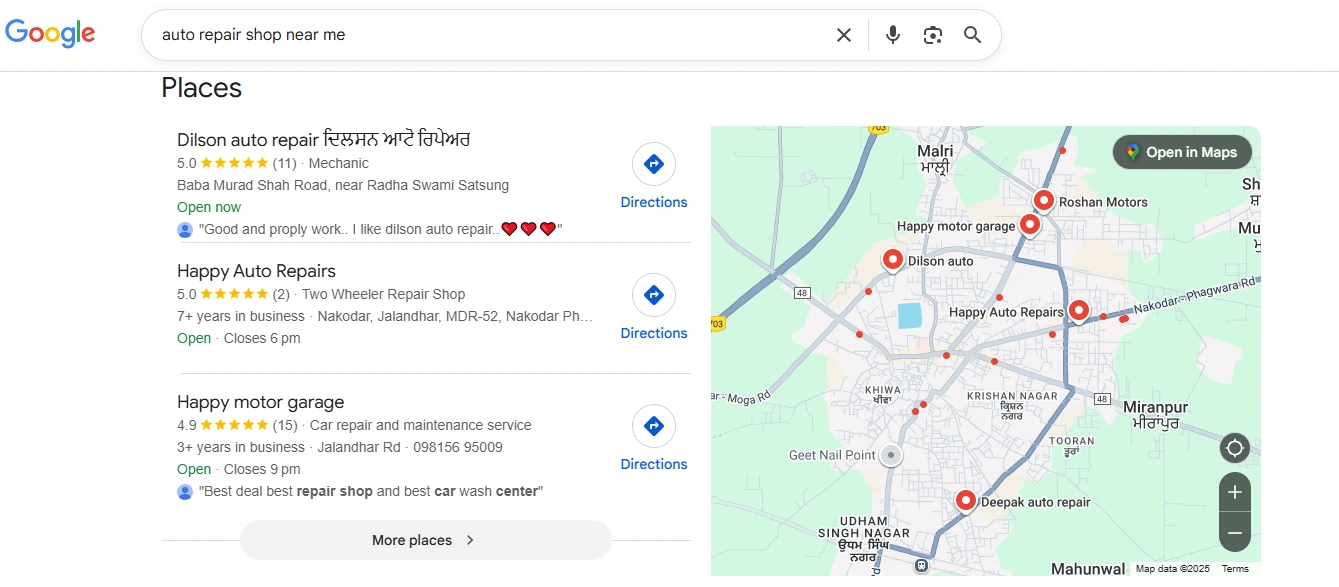
Embed a map showing your location. Allow visitors to easily drop a pin on Google maps so they can get precise directions to your garage in seconds.This is especially important for new customers who’ve never visited your shop before.
7. Before and After Gallery
Show photos of repairs you’ve completed. This proves you do quality work. Pictures of a rusty brake rotor next to a brand new one, or a damaged bumper before and after repair—these build confidence in your skills.
Want More Customers Calling Your Garage Every Day?
Get a professional website from Mandy Web Design that attracts local clients and turns visitors into appointments!
How to Optimize Your Auto Repair Website for Local SEO
Local SEO means showing up when people in your area search for auto repair. This is crucial because most of your customers live within a few miles of your shop. Good garage website design includes local SEO from the start.
Google Business Profile: Claim and complete your Google Business Profile. This is the most important thing for local search. Fill out every section completely. Add your address, phone number, hours, services, and photos. Encourage customers to leave reviews here. When people search for mechanics near them, Google shows businesses with complete profiles first.
Local Keywords on Your Website: Use your city and neighborhood names throughout your website. Instead of just “brake repair,” write “brake repair in [your city].” Include your location in page titles, headers, and content naturally. Don’t stuff keywords awkwardly—just mention where you’re located regularly.
NAP Consistency: NAP means Name, Address, Phone number. These must be identical everywhere online—your website, Google, Facebook, Yelp, everywhere. Even small differences like “St.” versus “Street” can hurt your rankings. Check all your listings and make them match perfectly.
Local Content: Write about local car problems. “Preparing Your Car for [City Name] Winter” or “Best Times for Oil Changes in [Your Area].” This content helps you rank for local searches and shows you understand your community.
Mobile Optimization: Most local searches happen on phones. Your website must work perfectly on mobile devices. Fast loading, easy to read, buttons big enough to tap—these matter for SEO and user experience. Google ranks mobile-friendly sites higher in search results.
Schema Markup: This is technical code that tells Google exactly what your business does. It includes your services, location, hours, and reviews. Many auto repair web design services include this automatically. It helps you show up in the local map pack—those three businesses that appear at the top of Google search results.
Get Listed in Local Directories: List your shop on Yelp, Yellow Pages, local chamber of commerce websites, and auto repair directories. These listings create backlinks to your website and improve your local SEO. Make sure all information matches your website exactly.
Building Trust: Using Reviews, Photos, and Service Pages Effectively
Trust is everything in the auto repair business. People are handing you their expensive vehicle and trusting you to fix it honestly. Your website needs to build that trust before they ever meet you.
1. Customer Reviews Front and Center
Display reviews prominently on your homepage. Pull them from Google, Yelp, and Facebook. Show star ratings and actual comments from real customers. Don’t hide reviews on a separate page—put them where visitors see them immediately. Reviews are the number one trust builder online.
2. Video Testimonials
Even better than written reviews are video testimonials. A short video of a happy customer talking about your service is incredibly powerful. It’s hard to fake and shows real people trust you. Even simple smartphone videos work great.
3. Real Photos of Your Shop
Show the inside of your garage, your equipment, and your team at work. Using structured pages and proper layouts helps improve website UI while highlighting your professionalism.. This transparency builds trust. Customers want to see a clean, organized shop with modern tools. Take photos on a good day when everything looks its best.
4. Team Member Profiles
Introduce your mechanics individually. Photo, name, years of experience, specialties, and maybe a fun fact. This makes your team feel real and approachable. People like knowing who will work on their car.
5. Certifications and Awards
Display any ASE certifications, manufacturer certifications, or awards prominently. These prove your expertise. Create a section showing all your credentials with official logos if allowed.
6. Detailed Service Pages
Create a separate page for each major service you offer. An automotive website design should have individual pages for brake repair, transmission service, engine diagnostics, and so on. Each page should explain what the service includes, why it’s important, and roughly what it costs. This detailed information builds trust and helps with SEO.
7. Warranty Information
Clearly state your warranties on repairs and parts. This shows confidence in your work. If you offer a 12-month warranty on labor, say so prominently. Warranties reduce the perceived risk of choosing your shop.
8. Transparent Pricing
While every job is different, showing price ranges for common services builds trust. People appreciate knowing that an oil change costs $40-$60 or brake pads are $150-$300 per axle. You’re not locked into these prices, but transparency matters.
9. Answer Common Questions
Create an FAQ section answering questions like “How long does an oil change take?” or “Do you offer free diagnostics?” or “What brands of parts do you use?” Answering questions upfront shows you have nothing to hide.
Best Practices for Mobile-Friendly and Fast Auto Repair Websites
Over 60% of people searching for auto repair shops do it from their phone. If your website doesn’t work well on mobile, you’re losing more than half your potential customers. Speed matters too. People won’t wait for a slow website to load—they’ll just go to the next shop.
Responsive Design: Your website must automatically adjust to any screen size. Text should be readable without zooming. Buttons should be big enough to tap with a thumb. Images should scale properly. This is called mobile responsive design, and it’s non-negotiable for modern websites.
Fast Loading Speed: Your website should load in under three seconds. Every second longer and you lose customers. Compress your images, use fast hosting, and minimize unnecessary code. Test your speed regularly using free tools like Google PageSpeed Insights.
Simple Mobile Navigation: Mobile menus should be simple. Use a “hamburger menu” (those three lines) that expands when tapped. Keep menu items to the essentials. Complicated navigation doesn’t work on small screens.
Tap-to-Call Functionality: Make your phone number a big, obvious button on mobile. Top design companies recommend tap-to-call placement that’s easy to reach and visually clear. This is often the most clicked element on mobile auto repair websites.
Large, Tappable Buttons: All buttons should be at least 44 pixels tall—big enough to tap easily. Space them apart so people don’t accidentally tap the wrong one. Use contrasting colors so buttons stand out.
Readable Text Without Zooming: Font size matters on mobile. Text should be at least 16 pixels for body copy. Use clear, simple fonts. Avoid light gray text on white backgrounds—the contrast needs to be strong.
Optimized Images: Large image files slow down your website. Compress images before uploading them. Use modern formats like WebP that load faster. Images should look good but not be so large they hurt performance.
Minimal Pop-ups: Pop-ups are annoying on mobile. If you must use them, make sure they’re easy to close and don’t cover the entire screen. Google actually penalizes sites with intrusive mobile pop-ups.
Test on Real Devices: Don’t just assume your website works on mobile. Test it on actual phones and tablets. Try different browsers. Click every button and fill out every form. Have friends test it too. Real-world testing catches problems you might miss.
Common Web Design Mistakes Auto Repair Shops Should Avoid
Many garage websites make the same mistakes. These errors cost you customers every day. Avoiding these problems will put you ahead of most of your competition.
Auto-Playing Music or Videos
Never, ever have sounds or videos that play automatically. This scares visitors away instantly. People browse websites in quiet places or with their phone on. Unexpected sounds are jarring and unprofessional.
Cluttered Homepage
Some shops try to put everything on their homepage. Walls of text, dozens of images, flashing graphics—it’s overwhelming. Keep your homepage clean and focused. Show the most important information clearly.
Hidden Contact Information
Your phone number and address should be visible on every page without scrolling. Don’t make people search for how to contact you. This is especially bad on mobile where screen space is limited.
Using Too Much Technical Jargon
Most customers aren’t mechanics. Don’t fill your website with technical terms they won’t understand. Use simple language. Instead of “perform comprehensive driveline diagnostics,” say “we find out what’s wrong with your car.”
Outdated Content
Nothing says “we don’t care” like a website with old information. If your latest news post is from 2019, remove it. If you list hours but they’ve changed, update them. Old content makes people think you’re out of business.
No Clear Call-to-Action
Every page should tell visitors what to do next. Without clear “Call Now” or “Book Appointment” buttons, people won’t take action. Make it obvious what you want them to do.
Slow Loading Times
Already mentioned, but it’s worth repeating. Slow websites lose customers. If your site takes more than five seconds to load, people will leave. Optimize everything for speed.
Not Mobile-Friendly
This deserves repeating too. A website that doesn’t work on phones is useless today. More than half your visitors will never see your desktop site.
Stock Photos That Look Fake
Generic photos of models in mechanic uniforms look fake because they are fake. Customers see through this immediately. Use real photos of your actual shop and team, even if they’re not professional quality.
Complicated Booking Process
If booking an appointment takes more than a few minutes, people will give up. Keep forms short. Don’t ask for unnecessary information. Make it as easy as possible.
Broken Links and Errors
Click every link on your website regularly. Fix anything broken immediately. Nothing looks more unprofessional than clicking a button that doesn’t work.
How a Professional Auto Repair Website Can Increase Customer Leads
Investing in professional auto repair web design services pays for itself quickly through increased leads and customers. Here’s exactly how a well-designed website brings in more business.
First Impressions Matter
You have about three seconds to make a good impression online. A professional website immediately tells visitors you run a professional business. Clean website design layouts, UI/UX trends, good photos, and clear information signal quality and trustworthiness to visitors instantly.
24/7 Lead Generation
Your website works around the clock. Someone’s car breaks down at 10 PM. They can’t call you, but they can find your website, see your reviews, and book an appointment for tomorrow. You wake up with a new customer without doing anything.
Capturing Search Traffic
When someone searches for “mechanic near me,” you want to appear. Professional websites are built with a SEO-friendly website structure from the start. Correct structure, proper keyword placement, and fast loading times help Google rank your site higher and capture more search traffic.
Converting Visitors to Customers
Professional design includes elements that convert visitors into customers. Strategic placement of buttons, social proof through reviews, clear service descriptions, and easy contact methods all increase conversion rates. A well-designed site might convert 5-10% of visitors while a poor one converts less than 1%.
Building Credibility Instantly
An automotive website design that looks professional makes your business seem more established and trustworthy. People judge businesses by their websites. A good website suggests you’re successful, established, and care about quality.
Competing with Chain Shops
Big chain repair shops have expensive websites. To compete, your website needs to look equally professional, using the latest website design trends while highlighting your advantages—personal service, local ownership, and flexible pricing. Professional design levels the playing field.
Showcasing Your Unique Value
What makes your shop different? Maybe you specialize in certain car brands. Maybe you offer free loaner cars. Perhaps you’ve been family-owned for 30 years. A professional website highlights what makes you special and turns that into a reason to choose you.
Reducing Phone Calls for Simple Questions
Your staff spends time answering the same questions repeatedly. What are your hours? Do you fix transmissions? How much does it cost? A good website answers these questions, freeing your team to focus on actual customers.
Creating Multiple Contact Points
Professional websites offer several ways to connect: phone, email, contact form, online booking, live chat. Different people prefer different methods. Offering all options captures more leads.
Tracking and Improving Results
Professional websites include analytics that show what’s working. You can see which services people search for most, which pages convert best, and where visitors come from. This data helps you improve and get even more leads over time.
Why Auto Repair Shops Choose Mandy Web Design
Mandy Web Design is a professional designing agency dedicated to helping businesses build clean, modern, and high-converting websites. We specialize in creating designs that not only look professional but also help brands stand out, attract more customers, and make a strong online impression.
We offer affordable design packages, giving businesses great value without compromising quality. Our pricing is transparent and budget-friendly, with complete website solutions starting from just Rs 13,000, making it easy for small and medium businesses to get online quickly and professionally.
Mandy Web Design provides a full-suite web design service for all types of industries like real estate, healthcare, corporate, education, industrial, manufacturing, fashion, enterprise, law firm, and construction.
Our offerings include custom design, responsive design, website redesign, UI/UX design, WordPress design, eCommerce design, and website maintenance, giving you everything you need to build, improve, or grow your website with confidence.
Ready to Make Your Garage the First Choice Online?
Contact Mandy Web Design today and start building a website that drives more leads, bookings, and loyal customers!
FAQs About Auto Repair Website Design
A website helps your garage attract local customers, showcase services, display reviews, and provide contact details. Without a website, potential clients may assume your shop is unprofessional or inactive, causing you to lose business to competitors with a modern online presence.
Mandy Web Design offers affordable website designing packages starting from just Rs 13,000. Packages include responsive design, custom layouts, online booking, and maintenance, giving garages a professional online presence without overspending while ensuring long-term usability and customer engagement.
Essential features include online booking, click-to-call buttons, service cost estimators, live chat, Google Maps integration, and customer reviews. These tools make it easy for visitors to contact your garage, schedule appointments, and trust your services quickly and efficiently.
Local SEO strategies like city-specific keywords, consistent NAP information, Google Business Profile optimization, local content, and directory listings help your website appear in nearby searches, attracting potential customers within your area and boosting leads for your auto repair business.
Yes. Features like online booking, clear call-to-action buttons, service pages, and contact forms help convert visitors into paying customers. A professional website improves trust, convenience, and accessibility, increasing the number of daily calls, scheduled appointments, and repeat clients for your garage.
Mandy Web Design is a top rated web design and development agency offering affordable, high-converting websites. We specialize in responsive, custom, and full-suite services tailored for auto repair garages, helping attract local clients, increase leads, and turn online visitors into loyal customers effectively.
Ongoing maintenance from Mandy Web Design includes updates, backups, security checks, and performance optimization. Regular care keeps your website running smoothly, enhances user experience, protects against errors, and ensures your garage website continues to generate leads and bookings reliably.
Customer reviews, team photos, certifications, service pages, transparent pricing, and warranties build trust. Showing real images of your garage and team and providing detailed service information reassures visitors that your auto repair shop is professional, credible, and reliable.

About the Writer
Mandeep Singh Chahal
Founder/CEO, Mandy Web Design
Mandeep Singh Chahal is the proud Founder/CEO of Mandy Web Design. After completing his graduation from Punjab University, Mr. Mandeep started gaining experience in SEO, Digital Marketing, Web Designing, and Business Development. His years of experience have earned him a reputed Web Design Company – Mandy Web Design.